...

What is 3D Laser Scanning and What is It Used For? Your Complete Guide and Industry Insights.

...
For more information on What is 3D Laser Scanning and What is It Used For?. Please complete the below form.

"*" indicates required fields

    • Artificial Intelligence (AI) Integration: AI-driven scanners will automatically identify and classify objects, increasing speed and accuracy in complex environments.
    • Real-Time Reality Capture: Future scanners will deliver instant point clouds and model updates, ideal for live construction monitoring.
    • Wearable & Mobile Scanners: Compact, wearable devices will enable continuous scanning while technicians walk the site, enhancing productivity.
    • Cloud-Based Processing: Faster, accessible processing on cloud platforms, enabling collaborative remote viewing and analysis.

As these innovations unfold, expect laser scanning to become even faster, more accessible, and integral to all stages of design, construction, and maintenance.

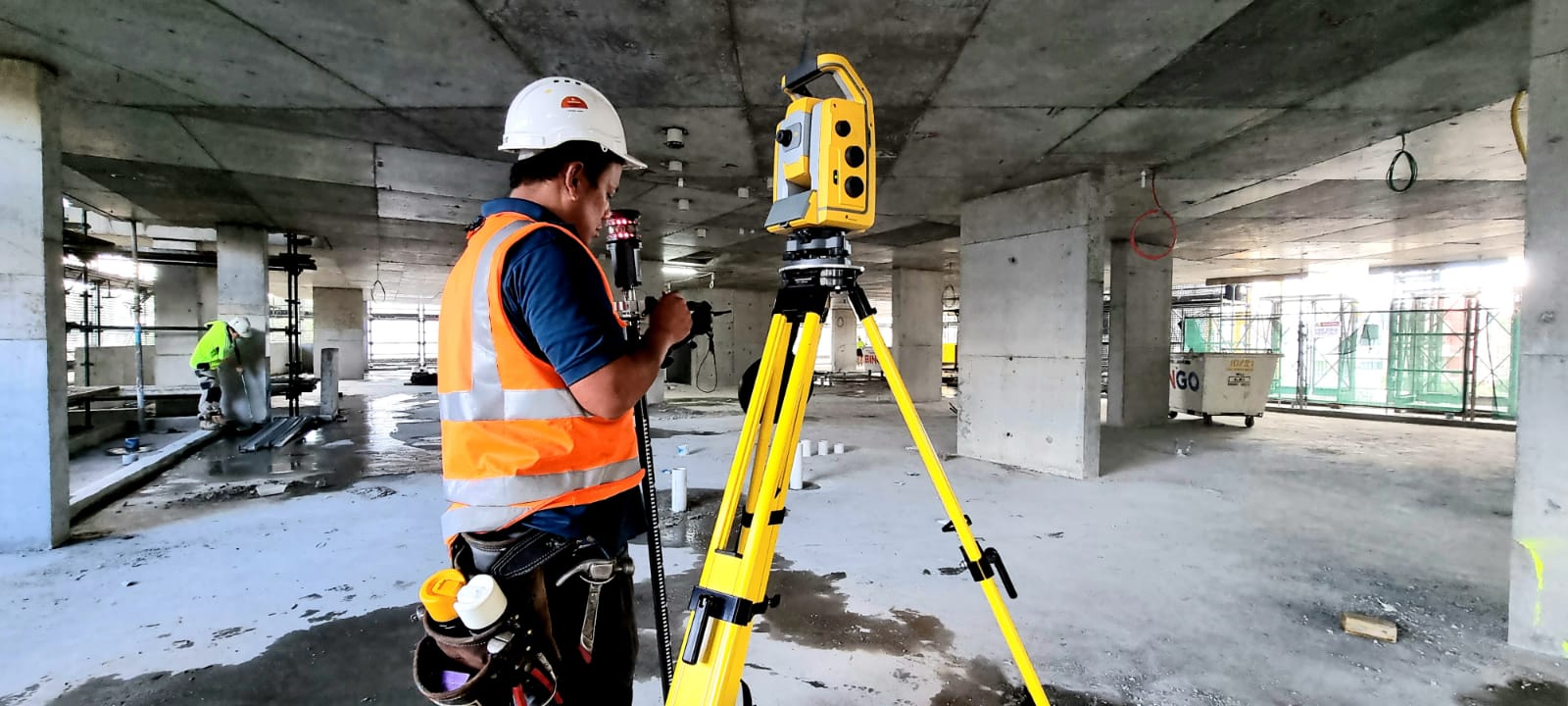
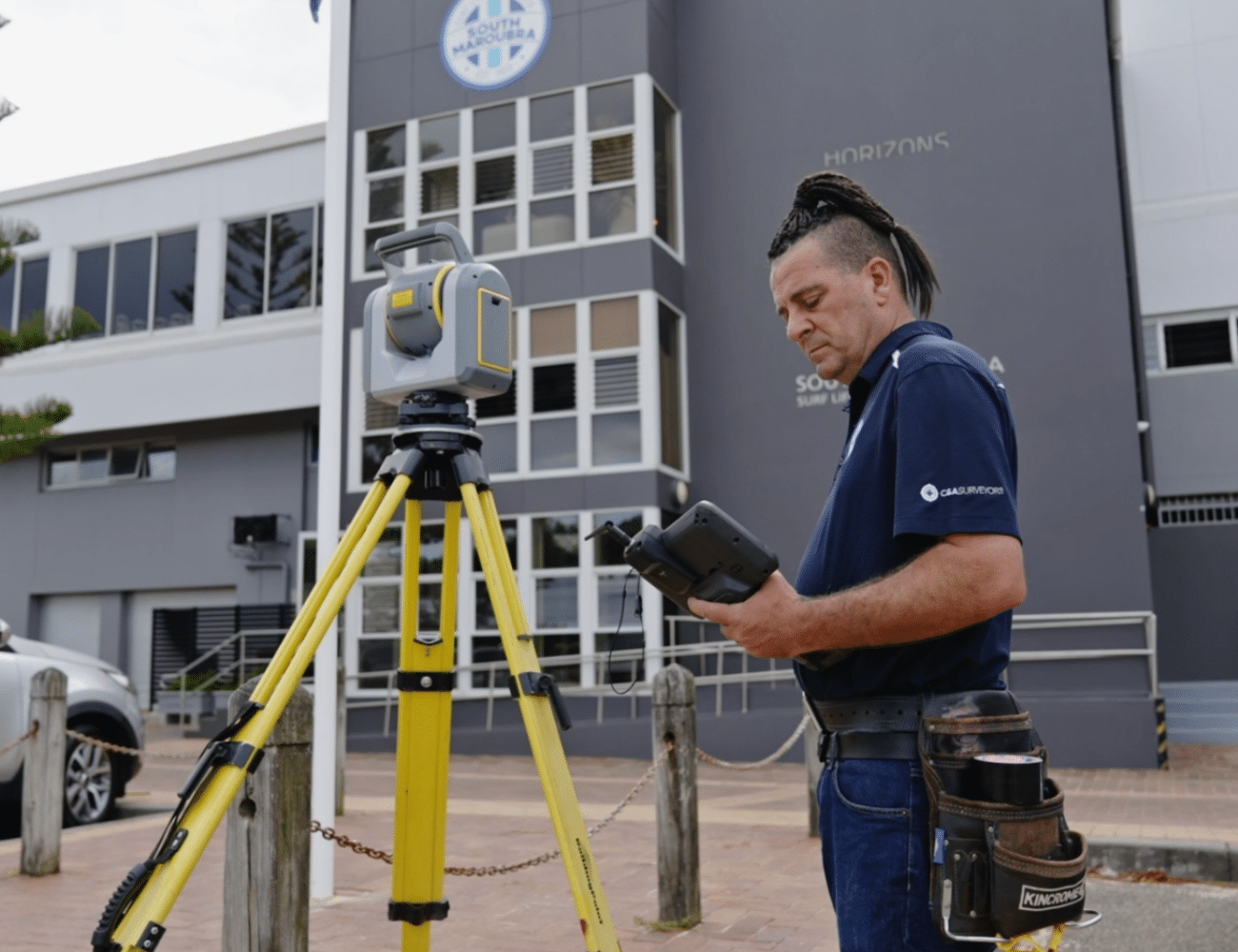
Thumbnail-For-Surveying-Engineer-Working-Site-Survey-By-C&Amp;A Surveyors Sydney

Choosing the Right Scanning Solution

Selecting the right laser scanning solution involves considering the project requirements such as resolution, accuracy, project scale, and deliverable needs. Consulting with experienced scanning providers ensures optimal outcomes, efficient workflows, and valuable insights into using laser scanning effectively.

Expert Insight

“The pace of advancement in 3D laser scanning is unprecedented. Soon, we’ll see scanners everywhere – not just on tripods, but built into everyday devices – turning every walk-through into valuable digital data.”
— Tristan Smythe, 3D Modelling Manager, C&A Surveyors

A Surveyor Using His Tools On The Job

Frequently Asked Questions (FAQs)

How long does a 3D laser scan take?

Most residential or commercial scans take several hours to a few days, depending on the size and complexity of the project.

Is 3D laser scanning safe?

Yes, laser scanning is entirely safe. It uses Class 1 lasers, posing no risk to humans, animals, or structures.

Can 3D scans replace traditional surveys?

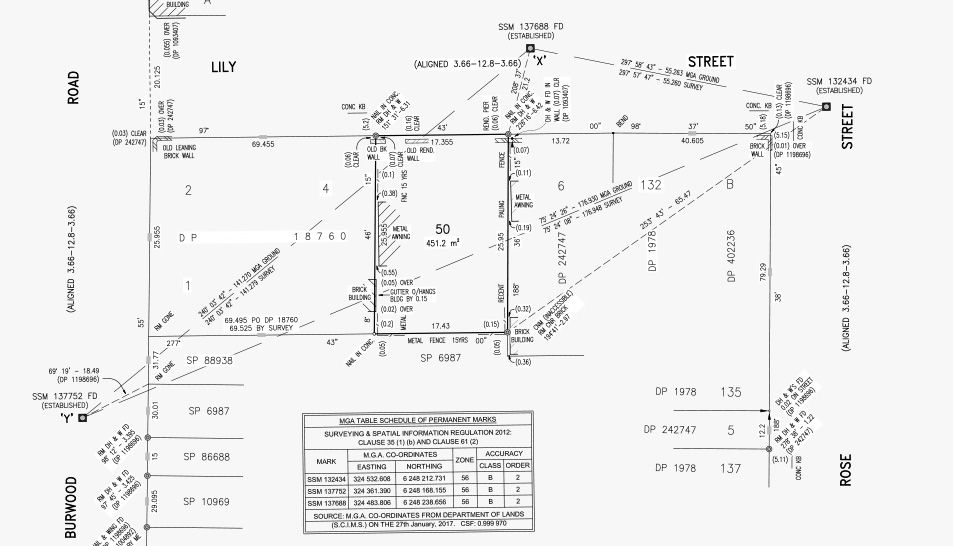
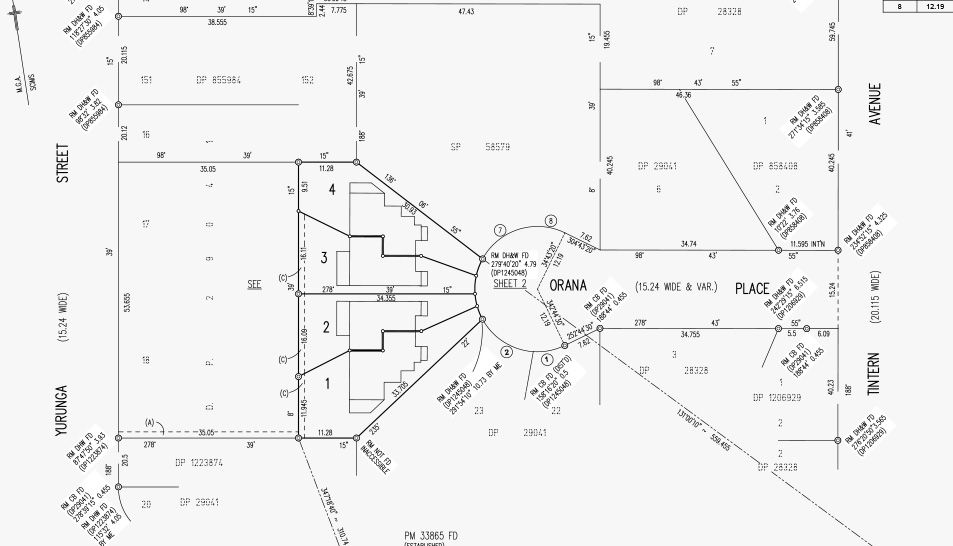
Yes, 3D laser scanning excels in detailed data capture and the data can be used in line with traditional surveys. Some councils require surveys that have the boundaries of your property defined, so it’s important you consult with us prior to booking in a survey.

Will 3D laser scanning disrupt my site?

No. Laser scanning is non-invasive, silent, and safe for people, animals, and structures. Scans are typically completed with minimal disturbance.

At C&A Surveyors, we offer cutting-edge 3D laser scanning services tailored to your project’s specific needs.

With over 15 years of experience and a 4.9-star Google rating from over 200 reviews, our highly skilled team utilise advanced scanning technology, ensuring precise and efficient results that significantly enhance your project’s accuracy, cost-effectiveness, and timeline.

  • Proven Expertise: Years of experience across residential, commercial, heritage, and infrastructure projects.
  • Comprehensive Support: End-to-end project guidance, from initial consultation to final deliverables.
  • State-of-the-Art Equipment: Utilising the latest LiDAR scanners like Leica RTC360 for unmatched data quality.

Contact us today to learn how we can transform your project through our comprehensive surveying expertise.

Learn More About Us and How We Work

At C&A Surveyors, we believe in making surveying and 3D laser scanning simple, transparent, and stress-free.

Our process is designed to give you complete confidence from the moment you engage us. We begin with a clear explanation of what your project needs, followed by fast, accurate fieldwork and detailed reporting that meets council and legal standards. With in-house Registered Surveyors, advanced technology, and a dedicated client portal, we keep you informed every step of the way.

Whether you’re planning a build, subdivision, or development application, we’re here to help you get it right from the ground up. Learn more about our approach here, watch the video below and get in touch for a personalised consultation!

[/et_pb_text][/et_pb_column][/et_pb_row][/et_pb_section]

As scanning technology evolves, expect significant developments:

      • Artificial Intelligence (AI) Integration: AI-driven scanners will automatically identify and classify objects, increasing speed and accuracy in complex environments.
      • Real-Time Reality Capture: Future scanners will deliver instant point clouds and model updates, ideal for live construction monitoring.
      • Wearable & Mobile Scanners: Compact, wearable devices will enable continuous scanning while technicians walk the site, enhancing productivity.
      • Cloud-Based Processing: Faster, accessible processing on cloud platforms, enabling collaborative remote viewing and analysis.

    As these innovations unfold, expect laser scanning to become even faster, more accessible, and integral to all stages of design, construction, and maintenance.

    Thumbnail-For-Surveying-Engineer-Working-Site-Survey-By-C&Amp;A Surveyors Sydney

    Choosing the Right Scanning Solution

    Selecting the right laser scanning solution involves considering the project requirements such as resolution, accuracy, project scale, and deliverable needs. Consulting with experienced scanning providers ensures optimal outcomes, efficient workflows, and valuable insights into using laser scanning effectively.

    Expert Insight

    “The pace of advancement in 3D laser scanning is unprecedented. Soon, we’ll see scanners everywhere – not just on tripods, but built into everyday devices – turning every walk-through into valuable digital data.”
    — Tristan Smythe, 3D Modelling Manager, C&A Surveyors

    A Surveyor Using His Tools On The Job

    Frequently Asked Questions (FAQs)

    How long does a 3D laser scan take?

    Most residential or commercial scans take several hours to a few days, depending on the size and complexity of the project.

    Is 3D laser scanning safe?

    Yes, laser scanning is entirely safe. It uses Class 1 lasers, posing no risk to humans, animals, or structures.

    Can 3D scans replace traditional surveys?

    Yes, 3D laser scanning excels in detailed data capture and the data can be used in line with traditional surveys. Some councils require surveys that have the boundaries of your property defined, so it’s important you consult with us prior to booking in a survey.

    Will 3D laser scanning disrupt my site?

    No. Laser scanning is non-invasive, silent, and safe for people, animals, and structures. Scans are typically completed with minimal disturbance.

    Why Choose C&A Surveyors?

    At C&A Surveyors, we offer cutting-edge 3D laser scanning services tailored to your project’s specific needs.

    With over 15 years of experience and a 4.9-star Google rating from over 200 reviews, our highly skilled team utilise advanced scanning technology, ensuring precise and efficient results that significantly enhance your project’s accuracy, cost-effectiveness, and timeline.

    • Proven Expertise: Years of experience across residential, commercial, heritage, and infrastructure projects.
    • Comprehensive Support: End-to-end project guidance, from initial consultation to final deliverables.
    • State-of-the-Art Equipment: Utilising the latest LiDAR scanners like Leica RTC360 for unmatched data quality.

    Contact us today to learn how we can transform your project through our comprehensive surveying expertise.

    Learn More About Us and How We Work

    At C&A Surveyors, we believe in making surveying and 3D laser scanning simple, transparent, and stress-free.

    Our process is designed to give you complete confidence from the moment you engage us. We begin with a clear explanation of what your project needs, followed by fast, accurate fieldwork and detailed reporting that meets council and legal standards. With in-house Registered Surveyors, advanced technology, and a dedicated client portal, we keep you informed every step of the way.

    Whether you’re planning a build, subdivision, or development application, we’re here to help you get it right from the ground up. Learn more about our approach here, watch the video below and get in touch for a personalised consultation!

    [/et_pb_text][/et_pb_column][/et_pb_row][/et_pb_section]

    To ensure a successful scan, avoid these pitfalls:

        • Poor Scope Definition: Unclear goals can lead to unnecessary costs and data overload. Clearly define required outputs (e.g., 2D drawings vs detailed 3D models).
        • Limited Site Access: Restricted access means missed areas or incomplete data. Plan site access thoroughly with your surveyor.
        • Insufficient Scan Stations: Too few scan positions can leave data gaps. Trust an experienced technician’s recommendation on required positions.
        • Ignoring Scan Resolution Needs: A low-resolution scan or poor equipment won’t capture critical details for historical preservation, while high-resolution scans may be excessive for simple layouts.
        • Choosing Inexperienced Providers: Accurate scanning requires trained technicians and reputable equipment; choose wisely to avoid costly reworks.

      As scanning technology evolves, expect significant developments:

          • Artificial Intelligence (AI) Integration: AI-driven scanners will automatically identify and classify objects, increasing speed and accuracy in complex environments.
          • Real-Time Reality Capture: Future scanners will deliver instant point clouds and model updates, ideal for live construction monitoring.
          • Wearable & Mobile Scanners: Compact, wearable devices will enable continuous scanning while technicians walk the site, enhancing productivity.
          • Cloud-Based Processing: Faster, accessible processing on cloud platforms, enabling collaborative remote viewing and analysis.

        As these innovations unfold, expect laser scanning to become even faster, more accessible, and integral to all stages of design, construction, and maintenance.

        Thumbnail-For-Surveying-Engineer-Working-Site-Survey-By-C&Amp;A Surveyors Sydney

        Choosing the Right Scanning Solution

        Selecting the right laser scanning solution involves considering the project requirements such as resolution, accuracy, project scale, and deliverable needs. Consulting with experienced scanning providers ensures optimal outcomes, efficient workflows, and valuable insights into using laser scanning effectively.

        Expert Insight

        “The pace of advancement in 3D laser scanning is unprecedented. Soon, we’ll see scanners everywhere – not just on tripods, but built into everyday devices – turning every walk-through into valuable digital data.”
        — Tristan Smythe, 3D Modelling Manager, C&A Surveyors

        A Surveyor Using His Tools On The Job

        Frequently Asked Questions (FAQs)

        How long does a 3D laser scan take?

        Most residential or commercial scans take several hours to a few days, depending on the size and complexity of the project.

        Is 3D laser scanning safe?

        Yes, laser scanning is entirely safe. It uses Class 1 lasers, posing no risk to humans, animals, or structures.

        Can 3D scans replace traditional surveys?

        Yes, 3D laser scanning excels in detailed data capture and the data can be used in line with traditional surveys. Some councils require surveys that have the boundaries of your property defined, so it’s important you consult with us prior to booking in a survey.

        Will 3D laser scanning disrupt my site?

        No. Laser scanning is non-invasive, silent, and safe for people, animals, and structures. Scans are typically completed with minimal disturbance.

        Why Choose C&A Surveyors?

        At C&A Surveyors, we offer cutting-edge 3D laser scanning services tailored to your project’s specific needs.

        With over 15 years of experience and a 4.9-star Google rating from over 200 reviews, our highly skilled team utilise advanced scanning technology, ensuring precise and efficient results that significantly enhance your project’s accuracy, cost-effectiveness, and timeline.

        • Proven Expertise: Years of experience across residential, commercial, heritage, and infrastructure projects.
        • Comprehensive Support: End-to-end project guidance, from initial consultation to final deliverables.
        • State-of-the-Art Equipment: Utilising the latest LiDAR scanners like Leica RTC360 for unmatched data quality.

        Contact us today to learn how we can transform your project through our comprehensive surveying expertise.

        Learn More About Us and How We Work

        At C&A Surveyors, we believe in making surveying and 3D laser scanning simple, transparent, and stress-free.

        Our process is designed to give you complete confidence from the moment you engage us. We begin with a clear explanation of what your project needs, followed by fast, accurate fieldwork and detailed reporting that meets council and legal standards. With in-house Registered Surveyors, advanced technology, and a dedicated client portal, we keep you informed every step of the way.

        Whether you’re planning a build, subdivision, or development application, we’re here to help you get it right from the ground up. Learn more about our approach here, watch the video below and get in touch for a personalised consultation!

        [/et_pb_text][/et_pb_column][/et_pb_row][/et_pb_section]

        Law enforcement and forensic teams utilise laser scanning to accurately document crime and accident scenes. The detailed scans preserve vital evidence for analysis and courtroom presentations, providing clarity and objectivity in investigations.

        C&Amp;A-Surveyors-Commercial-3D-Modelling-And-Survey

        Case Studies and Real-World Examples

            • Residential Renovation, Vaucluse (Sydney, NSW): A detailed laser scan of an existing heritage-listed home allowed architects to develop precise renovation plans, preserving original architectural elements while seamlessly integrating modern features.
            • Commercial Development, Footscray (Melbourne, Victoria): Laser scanning facilitated accurate modelling of complex mechanical, electrical, and plumbing (MEP) systems, reducing project timelines and preventing costly onsite errors.
            • Infrastructure Project, Hendra (Brisbane, Queensland): Detailed scanning of a bridge provided engineers with accurate structural data, significantly improving project safety and efficiency during renovations.

          Deliverables Produced by 3D Laser Scanning

            • Point Clouds: Raw data representing millions of measurement points.
            • 3D Models: Detailed digital models for BIM, CAD, and virtual walkthroughs.
            • Virtual Tours and Walkthroughs: Interactive digital experiences for client and stakeholder presentations.
            • Digital Twins: Comprehensive, virtual replicas of physical assets or environments.

          Pros and Cons: 3D Laser Scanning vs Traditional 2D Surveying

          Feature 3D Laser Scanning Traditional 2D Surveying
          Speed Rapid data capture (millions of points/second) Slow, manual point-by-point measurements
          Data Richness Comprehensive 3D data Limited 2D coordinates
          Versatility Creates multiple deliverables Limited deliverable options
          Cost Higher upfront but lowers total project cost Lower upfront cost
          Complexity Requires specialised training Requires specialised training

          Conclusion: 3D scanning excels in accuracy, speed, and versatility, making it invaluable for complex or detailed projects despite higher initial investments.

          Common Mistakes to Avoid with 3D Laser Scanning

          To ensure a successful scan, avoid these pitfalls:

              • Poor Scope Definition: Unclear goals can lead to unnecessary costs and data overload. Clearly define required outputs (e.g., 2D drawings vs detailed 3D models).
              • Limited Site Access: Restricted access means missed areas or incomplete data. Plan site access thoroughly with your surveyor.
              • Insufficient Scan Stations: Too few scan positions can leave data gaps. Trust an experienced technician’s recommendation on required positions.
              • Ignoring Scan Resolution Needs: A low-resolution scan or poor equipment won’t capture critical details for historical preservation, while high-resolution scans may be excessive for simple layouts.
              • Choosing Inexperienced Providers: Accurate scanning requires trained technicians and reputable equipment; choose wisely to avoid costly reworks.

            As scanning technology evolves, expect significant developments:

                • Artificial Intelligence (AI) Integration: AI-driven scanners will automatically identify and classify objects, increasing speed and accuracy in complex environments.
                • Real-Time Reality Capture: Future scanners will deliver instant point clouds and model updates, ideal for live construction monitoring.
                • Wearable & Mobile Scanners: Compact, wearable devices will enable continuous scanning while technicians walk the site, enhancing productivity.
                • Cloud-Based Processing: Faster, accessible processing on cloud platforms, enabling collaborative remote viewing and analysis.

              As these innovations unfold, expect laser scanning to become even faster, more accessible, and integral to all stages of design, construction, and maintenance.

              Thumbnail-For-Surveying-Engineer-Working-Site-Survey-By-C&Amp;A Surveyors Sydney

              Choosing the Right Scanning Solution

              Selecting the right laser scanning solution involves considering the project requirements such as resolution, accuracy, project scale, and deliverable needs. Consulting with experienced scanning providers ensures optimal outcomes, efficient workflows, and valuable insights into using laser scanning effectively.

              Expert Insight

              “The pace of advancement in 3D laser scanning is unprecedented. Soon, we’ll see scanners everywhere – not just on tripods, but built into everyday devices – turning every walk-through into valuable digital data.”
              — Tristan Smythe, 3D Modelling Manager, C&A Surveyors

              A Surveyor Using His Tools On The Job

              Frequently Asked Questions (FAQs)

              How long does a 3D laser scan take?

              Most residential or commercial scans take several hours to a few days, depending on the size and complexity of the project.

              Is 3D laser scanning safe?

              Yes, laser scanning is entirely safe. It uses Class 1 lasers, posing no risk to humans, animals, or structures.

              Can 3D scans replace traditional surveys?

              Yes, 3D laser scanning excels in detailed data capture and the data can be used in line with traditional surveys. Some councils require surveys that have the boundaries of your property defined, so it’s important you consult with us prior to booking in a survey.

              Will 3D laser scanning disrupt my site?

              No. Laser scanning is non-invasive, silent, and safe for people, animals, and structures. Scans are typically completed with minimal disturbance.

              Why Choose C&A Surveyors?

              At C&A Surveyors, we offer cutting-edge 3D laser scanning services tailored to your project’s specific needs.

              With over 15 years of experience and a 4.9-star Google rating from over 200 reviews, our highly skilled team utilise advanced scanning technology, ensuring precise and efficient results that significantly enhance your project’s accuracy, cost-effectiveness, and timeline.

              • Proven Expertise: Years of experience across residential, commercial, heritage, and infrastructure projects.
              • Comprehensive Support: End-to-end project guidance, from initial consultation to final deliverables.
              • State-of-the-Art Equipment: Utilising the latest LiDAR scanners like Leica RTC360 for unmatched data quality.

              Contact us today to learn how we can transform your project through our comprehensive surveying expertise.

              Learn More About Us and How We Work

              At C&A Surveyors, we believe in making surveying and 3D laser scanning simple, transparent, and stress-free.

              Our process is designed to give you complete confidence from the moment you engage us. We begin with a clear explanation of what your project needs, followed by fast, accurate fieldwork and detailed reporting that meets council and legal standards. With in-house Registered Surveyors, advanced technology, and a dedicated client portal, we keep you informed every step of the way.

              Whether you’re planning a build, subdivision, or development application, we’re here to help you get it right from the ground up. Learn more about our approach here, watch the video below and get in touch for a personalised consultation!

              [/et_pb_text][/et_pb_column][/et_pb_row][/et_pb_section]

              The scanning process involves five main steps:

                  1. Project Planning: Clearly define objectives, deliverables, scan resolution, and accuracy.
                  2. On-site Scanning: Trained technicians position the scanner at strategic points, capturing millions of spatial data points via laser pulses.
                  3. Data Capture: Laser pulses reflect off surfaces, calculating exact coordinates (x, y, z).
                  4. Data Processing: Individual scans from multiple locations are combined into a unified point cloud.
                  5. Modelling Data into Interactive Deliverables: Our experienced in-house team of modellers render the registered point cloud into practical user-friendly formats and models that are intuitive and accessible for architects, engineers, contractors and facility managers, to facilitate informed decision-making throughout the project lifecycle
                  6. Quality Assurance and Legal Verification: If project scope includes boundary identification, a Registered Surveyor reviews the completed models to verify that all property boundaries and relevant survey information have been accurately represented. Once verified, the Registered Surveyor provides formal approval and signs off on the documentation, transforming it into a legally recognised and authoritative survey report.

                South Maroubra Surf Club Digital Survey

                Key Benefits of 3D Laser Scanning

                    • High Accuracy: Captures precise details with millimetre-level accuracy.
                    • Efficiency: Reduces traditional survey times significantly.
                    • Detailed Documentation: Provides thorough, measurable, and verifiable records.
                    • Cost Savings: Minimises errors, rework, and additional site visits.
                    • Safety and Accessibility: Safely documents hazardous or hard-to-reach areas.

                  Common Applications of 3D Laser Scanning

                  1. Architecture and Construction

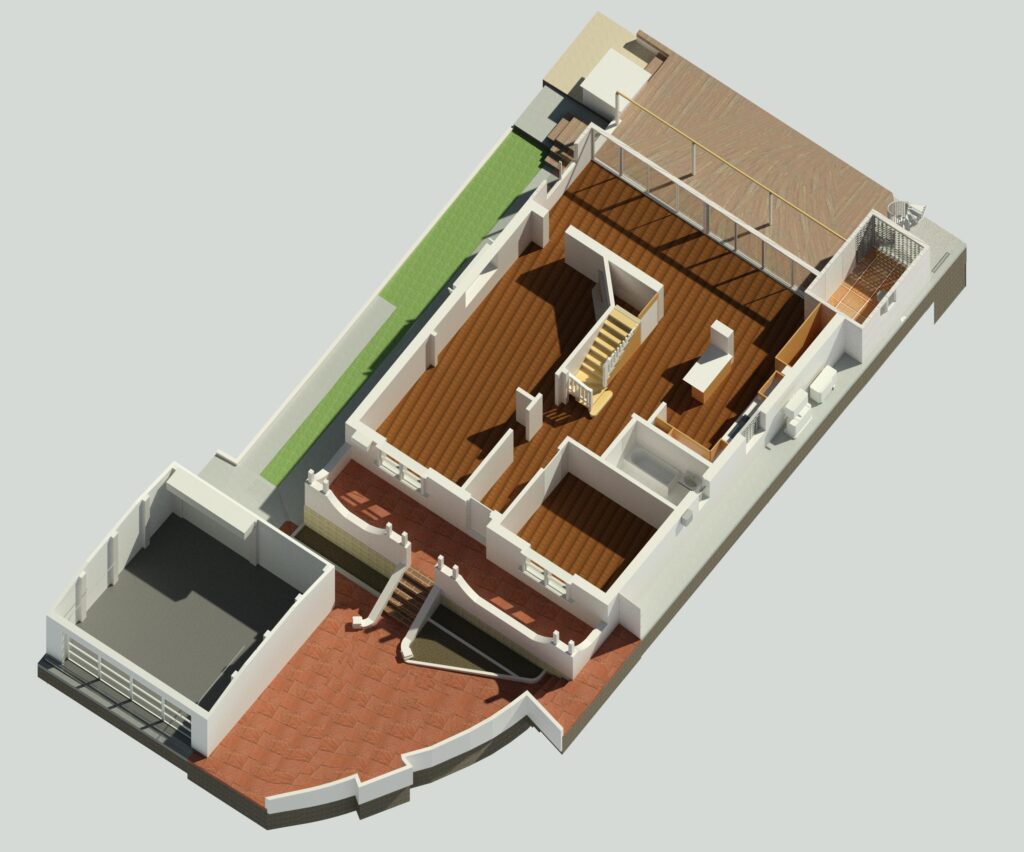
                  Architects and builders use 3D laser scanning to capture existing site conditions accurately. This precise data helps produce accurate as-built drawings, facilitate building information modelling (BIM), and support prefabrication processes, ultimately saving time and resources.

                  Bridge Street Sydney Digital Survey

                  2. Engineering Projects

                  Engineers rely on 3D scans for precise measurements critical in structural analysis, design validation, and project planning. Accurate scans help identify potential issues early, enabling efficient clash detection and avoiding costly redesigns.

                  Mep Point Cloud Picture

                  3. Historical Preservation

                  Laser scanning plays a crucial role in heritage preservation, allowing detailed documentation of historical sites without causing damage. High-resolution point clouds help conservationists restore and maintain architectural details accurately, such as intricate façades or ancient structures.

                  Notre Dame - 3D Laser Scan

                  4. Facility and Asset Management

                  Facility managers use 3D scans to create comprehensive digital twins of buildings and industrial facilities. These digital twins allow for improved asset management, facility maintenance planning, and informed decision-making based on precise visual data.

                  3D Modelling Of Mep Systems

                  5. Infrastructure and Urban Planning

                  Scanning aids infrastructure projects by accurately mapping roads, bridges, and public utilities, enhancing safety and efficiency. Urban planners benefit by visualising proposed developments within existing environments through detailed 3D scans, improving stakeholder communication and approvals.

                  3D Survey And Laser Scanning

                  6. Forensic Investigation

                  Law enforcement and forensic teams utilise laser scanning to accurately document crime and accident scenes. The detailed scans preserve vital evidence for analysis and courtroom presentations, providing clarity and objectivity in investigations.

                  C&Amp;A-Surveyors-Commercial-3D-Modelling-And-Survey

                  Case Studies and Real-World Examples

                      • Residential Renovation, Vaucluse (Sydney, NSW): A detailed laser scan of an existing heritage-listed home allowed architects to develop precise renovation plans, preserving original architectural elements while seamlessly integrating modern features.
                      • Commercial Development, Footscray (Melbourne, Victoria): Laser scanning facilitated accurate modelling of complex mechanical, electrical, and plumbing (MEP) systems, reducing project timelines and preventing costly onsite errors.
                      • Infrastructure Project, Hendra (Brisbane, Queensland): Detailed scanning of a bridge provided engineers with accurate structural data, significantly improving project safety and efficiency during renovations.

                    Deliverables Produced by 3D Laser Scanning

                      • Point Clouds: Raw data representing millions of measurement points.
                      • 3D Models: Detailed digital models for BIM, CAD, and virtual walkthroughs.
                      • Virtual Tours and Walkthroughs: Interactive digital experiences for client and stakeholder presentations.
                      • Digital Twins: Comprehensive, virtual replicas of physical assets or environments.

                    Pros and Cons: 3D Laser Scanning vs Traditional 2D Surveying

                    Feature 3D Laser Scanning Traditional 2D Surveying
                    Speed Rapid data capture (millions of points/second) Slow, manual point-by-point measurements
                    Data Richness Comprehensive 3D data Limited 2D coordinates
                    Versatility Creates multiple deliverables Limited deliverable options
                    Cost Higher upfront but lowers total project cost Lower upfront cost
                    Complexity Requires specialised training Requires specialised training

                    Conclusion: 3D scanning excels in accuracy, speed, and versatility, making it invaluable for complex or detailed projects despite higher initial investments.

                    Common Mistakes to Avoid with 3D Laser Scanning

                    To ensure a successful scan, avoid these pitfalls:

                        • Poor Scope Definition: Unclear goals can lead to unnecessary costs and data overload. Clearly define required outputs (e.g., 2D drawings vs detailed 3D models).
                        • Limited Site Access: Restricted access means missed areas or incomplete data. Plan site access thoroughly with your surveyor.
                        • Insufficient Scan Stations: Too few scan positions can leave data gaps. Trust an experienced technician’s recommendation on required positions.
                        • Ignoring Scan Resolution Needs: A low-resolution scan or poor equipment won’t capture critical details for historical preservation, while high-resolution scans may be excessive for simple layouts.
                        • Choosing Inexperienced Providers: Accurate scanning requires trained technicians and reputable equipment; choose wisely to avoid costly reworks.

                      As scanning technology evolves, expect significant developments:

                          • Artificial Intelligence (AI) Integration: AI-driven scanners will automatically identify and classify objects, increasing speed and accuracy in complex environments.
                          • Real-Time Reality Capture: Future scanners will deliver instant point clouds and model updates, ideal for live construction monitoring.
                          • Wearable & Mobile Scanners: Compact, wearable devices will enable continuous scanning while technicians walk the site, enhancing productivity.
                          • Cloud-Based Processing: Faster, accessible processing on cloud platforms, enabling collaborative remote viewing and analysis.

                        As these innovations unfold, expect laser scanning to become even faster, more accessible, and integral to all stages of design, construction, and maintenance.

                        Thumbnail-For-Surveying-Engineer-Working-Site-Survey-By-C&Amp;A Surveyors Sydney

                        Choosing the Right Scanning Solution

                        Selecting the right laser scanning solution involves considering the project requirements such as resolution, accuracy, project scale, and deliverable needs. Consulting with experienced scanning providers ensures optimal outcomes, efficient workflows, and valuable insights into using laser scanning effectively.

                        Expert Insight

                        “The pace of advancement in 3D laser scanning is unprecedented. Soon, we’ll see scanners everywhere – not just on tripods, but built into everyday devices – turning every walk-through into valuable digital data.”
                        — Tristan Smythe, 3D Modelling Manager, C&A Surveyors

                        A Surveyor Using His Tools On The Job

                        Frequently Asked Questions (FAQs)

                        How long does a 3D laser scan take?

                        Most residential or commercial scans take several hours to a few days, depending on the size and complexity of the project.

                        Is 3D laser scanning safe?

                        Yes, laser scanning is entirely safe. It uses Class 1 lasers, posing no risk to humans, animals, or structures.

                        Can 3D scans replace traditional surveys?

                        Yes, 3D laser scanning excels in detailed data capture and the data can be used in line with traditional surveys. Some councils require surveys that have the boundaries of your property defined, so it’s important you consult with us prior to booking in a survey.

                        Will 3D laser scanning disrupt my site?

                        No. Laser scanning is non-invasive, silent, and safe for people, animals, and structures. Scans are typically completed with minimal disturbance.

                        Why Choose C&A Surveyors?

                        At C&A Surveyors, we offer cutting-edge 3D laser scanning services tailored to your project’s specific needs.

                        With over 15 years of experience and a 4.9-star Google rating from over 200 reviews, our highly skilled team utilise advanced scanning technology, ensuring precise and efficient results that significantly enhance your project’s accuracy, cost-effectiveness, and timeline.

                        • Proven Expertise: Years of experience across residential, commercial, heritage, and infrastructure projects.
                        • Comprehensive Support: End-to-end project guidance, from initial consultation to final deliverables.
                        • State-of-the-Art Equipment: Utilising the latest LiDAR scanners like Leica RTC360 for unmatched data quality.

                        Contact us today to learn how we can transform your project through our comprehensive surveying expertise.

                        Learn More About Us and How We Work

                        At C&A Surveyors, we believe in making surveying and 3D laser scanning simple, transparent, and stress-free.

                        Our process is designed to give you complete confidence from the moment you engage us. We begin with a clear explanation of what your project needs, followed by fast, accurate fieldwork and detailed reporting that meets council and legal standards. With in-house Registered Surveyors, advanced technology, and a dedicated client portal, we keep you informed every step of the way.

                        Whether you’re planning a build, subdivision, or development application, we’re here to help you get it right from the ground up. Learn more about our approach here, watch the video below and get in touch for a personalised consultation!

                        [/et_pb_text][/et_pb_column][/et_pb_row][/et_pb_section]
                            • Early 2000s: Terrestrial laser scanners became more accessible, affordable, and accurate, leading to widespread adoption. Major surveying technology providers, like Leica, Faro, and Trimble, launched sophisticated terrestrial scanners that offered millimetre-level accuracy and drastically improved speed of data capture.
                            • Mid-2000s: Integration of laser scanning with Building Information Modelling (BIM) transformed the architectural, engineering, and construction (AEC) industries, allowing for precise digital modelling and improved construction workflows.

                          Modern Era (2010–Today)

                              • 2010 onwards: Advancements such as mobile LiDAR, drone-based scanning, and handheld scanning solutions emerged, providing rapid, efficient, and portable methods for capturing highly accurate data.
                              • Present: Today’s state-of-the-art scanners like the Leica RTC360 and Faro Focus offer real-time data processing, sub-centimetre precision, integrated HD photography, and cloud-based collaboration, making 3D laser scanning an indispensable tool in countless industries.

                            How Does The 3D Laser Scanning Process Work?

                            The scanning process involves five main steps:

                                1. Project Planning: Clearly define objectives, deliverables, scan resolution, and accuracy.
                                2. On-site Scanning: Trained technicians position the scanner at strategic points, capturing millions of spatial data points via laser pulses.
                                3. Data Capture: Laser pulses reflect off surfaces, calculating exact coordinates (x, y, z).
                                4. Data Processing: Individual scans from multiple locations are combined into a unified point cloud.
                                5. Modelling Data into Interactive Deliverables: Our experienced in-house team of modellers render the registered point cloud into practical user-friendly formats and models that are intuitive and accessible for architects, engineers, contractors and facility managers, to facilitate informed decision-making throughout the project lifecycle
                                6. Quality Assurance and Legal Verification: If project scope includes boundary identification, a Registered Surveyor reviews the completed models to verify that all property boundaries and relevant survey information have been accurately represented. Once verified, the Registered Surveyor provides formal approval and signs off on the documentation, transforming it into a legally recognised and authoritative survey report.

                              South Maroubra Surf Club Digital Survey

                              Key Benefits of 3D Laser Scanning

                                  • High Accuracy: Captures precise details with millimetre-level accuracy.
                                  • Efficiency: Reduces traditional survey times significantly.
                                  • Detailed Documentation: Provides thorough, measurable, and verifiable records.
                                  • Cost Savings: Minimises errors, rework, and additional site visits.
                                  • Safety and Accessibility: Safely documents hazardous or hard-to-reach areas.

                                Common Applications of 3D Laser Scanning

                                1. Architecture and Construction

                                Architects and builders use 3D laser scanning to capture existing site conditions accurately. This precise data helps produce accurate as-built drawings, facilitate building information modelling (BIM), and support prefabrication processes, ultimately saving time and resources.

                                Bridge Street Sydney Digital Survey

                                2. Engineering Projects

                                Engineers rely on 3D scans for precise measurements critical in structural analysis, design validation, and project planning. Accurate scans help identify potential issues early, enabling efficient clash detection and avoiding costly redesigns.

                                Mep Point Cloud Picture

                                3. Historical Preservation

                                Laser scanning plays a crucial role in heritage preservation, allowing detailed documentation of historical sites without causing damage. High-resolution point clouds help conservationists restore and maintain architectural details accurately, such as intricate façades or ancient structures.

                                Notre Dame - 3D Laser Scan

                                4. Facility and Asset Management

                                Facility managers use 3D scans to create comprehensive digital twins of buildings and industrial facilities. These digital twins allow for improved asset management, facility maintenance planning, and informed decision-making based on precise visual data.

                                3D Modelling Of Mep Systems

                                5. Infrastructure and Urban Planning

                                Scanning aids infrastructure projects by accurately mapping roads, bridges, and public utilities, enhancing safety and efficiency. Urban planners benefit by visualising proposed developments within existing environments through detailed 3D scans, improving stakeholder communication and approvals.

                                3D Survey And Laser Scanning

                                6. Forensic Investigation

                                Law enforcement and forensic teams utilise laser scanning to accurately document crime and accident scenes. The detailed scans preserve vital evidence for analysis and courtroom presentations, providing clarity and objectivity in investigations.

                                C&Amp;A-Surveyors-Commercial-3D-Modelling-And-Survey

                                Case Studies and Real-World Examples

                                    • Residential Renovation, Vaucluse (Sydney, NSW): A detailed laser scan of an existing heritage-listed home allowed architects to develop precise renovation plans, preserving original architectural elements while seamlessly integrating modern features.
                                    • Commercial Development, Footscray (Melbourne, Victoria): Laser scanning facilitated accurate modelling of complex mechanical, electrical, and plumbing (MEP) systems, reducing project timelines and preventing costly onsite errors.
                                    • Infrastructure Project, Hendra (Brisbane, Queensland): Detailed scanning of a bridge provided engineers with accurate structural data, significantly improving project safety and efficiency during renovations.

                                  Deliverables Produced by 3D Laser Scanning

                                    • Point Clouds: Raw data representing millions of measurement points.
                                    • 3D Models: Detailed digital models for BIM, CAD, and virtual walkthroughs.
                                    • Virtual Tours and Walkthroughs: Interactive digital experiences for client and stakeholder presentations.
                                    • Digital Twins: Comprehensive, virtual replicas of physical assets or environments.

                                  Pros and Cons: 3D Laser Scanning vs Traditional 2D Surveying

                                  Feature 3D Laser Scanning Traditional 2D Surveying
                                  Speed Rapid data capture (millions of points/second) Slow, manual point-by-point measurements
                                  Data Richness Comprehensive 3D data Limited 2D coordinates
                                  Versatility Creates multiple deliverables Limited deliverable options
                                  Cost Higher upfront but lowers total project cost Lower upfront cost
                                  Complexity Requires specialised training Requires specialised training

                                  Conclusion: 3D scanning excels in accuracy, speed, and versatility, making it invaluable for complex or detailed projects despite higher initial investments.

                                  Common Mistakes to Avoid with 3D Laser Scanning

                                  To ensure a successful scan, avoid these pitfalls:

                                      • Poor Scope Definition: Unclear goals can lead to unnecessary costs and data overload. Clearly define required outputs (e.g., 2D drawings vs detailed 3D models).
                                      • Limited Site Access: Restricted access means missed areas or incomplete data. Plan site access thoroughly with your surveyor.
                                      • Insufficient Scan Stations: Too few scan positions can leave data gaps. Trust an experienced technician’s recommendation on required positions.
                                      • Ignoring Scan Resolution Needs: A low-resolution scan or poor equipment won’t capture critical details for historical preservation, while high-resolution scans may be excessive for simple layouts.
                                      • Choosing Inexperienced Providers: Accurate scanning requires trained technicians and reputable equipment; choose wisely to avoid costly reworks.

                                    As scanning technology evolves, expect significant developments:

                                        • Artificial Intelligence (AI) Integration: AI-driven scanners will automatically identify and classify objects, increasing speed and accuracy in complex environments.
                                        • Real-Time Reality Capture: Future scanners will deliver instant point clouds and model updates, ideal for live construction monitoring.
                                        • Wearable & Mobile Scanners: Compact, wearable devices will enable continuous scanning while technicians walk the site, enhancing productivity.
                                        • Cloud-Based Processing: Faster, accessible processing on cloud platforms, enabling collaborative remote viewing and analysis.

                                      As these innovations unfold, expect laser scanning to become even faster, more accessible, and integral to all stages of design, construction, and maintenance.

                                      Thumbnail-For-Surveying-Engineer-Working-Site-Survey-By-C&Amp;A Surveyors Sydney

                                      Choosing the Right Scanning Solution

                                      Selecting the right laser scanning solution involves considering the project requirements such as resolution, accuracy, project scale, and deliverable needs. Consulting with experienced scanning providers ensures optimal outcomes, efficient workflows, and valuable insights into using laser scanning effectively.

                                      Expert Insight

                                      “The pace of advancement in 3D laser scanning is unprecedented. Soon, we’ll see scanners everywhere – not just on tripods, but built into everyday devices – turning every walk-through into valuable digital data.”
                                      — Tristan Smythe, 3D Modelling Manager, C&A Surveyors

                                      A Surveyor Using His Tools On The Job

                                      Frequently Asked Questions (FAQs)

                                      How long does a 3D laser scan take?

                                      Most residential or commercial scans take several hours to a few days, depending on the size and complexity of the project.

                                      Is 3D laser scanning safe?

                                      Yes, laser scanning is entirely safe. It uses Class 1 lasers, posing no risk to humans, animals, or structures.

                                      Can 3D scans replace traditional surveys?

                                      Yes, 3D laser scanning excels in detailed data capture and the data can be used in line with traditional surveys. Some councils require surveys that have the boundaries of your property defined, so it’s important you consult with us prior to booking in a survey.

                                      Will 3D laser scanning disrupt my site?

                                      No. Laser scanning is non-invasive, silent, and safe for people, animals, and structures. Scans are typically completed with minimal disturbance.

                                      Why Choose C&A Surveyors?

                                      At C&A Surveyors, we offer cutting-edge 3D laser scanning services tailored to your project’s specific needs.

                                      With over 15 years of experience and a 4.9-star Google rating from over 200 reviews, our highly skilled team utilise advanced scanning technology, ensuring precise and efficient results that significantly enhance your project’s accuracy, cost-effectiveness, and timeline.

                                      • Proven Expertise: Years of experience across residential, commercial, heritage, and infrastructure projects.
                                      • Comprehensive Support: End-to-end project guidance, from initial consultation to final deliverables.
                                      • State-of-the-Art Equipment: Utilising the latest LiDAR scanners like Leica RTC360 for unmatched data quality.

                                      Contact us today to learn how we can transform your project through our comprehensive surveying expertise.

                                      Learn More About Us and How We Work

                                      At C&A Surveyors, we believe in making surveying and 3D laser scanning simple, transparent, and stress-free.

                                      Our process is designed to give you complete confidence from the moment you engage us. We begin with a clear explanation of what your project needs, followed by fast, accurate fieldwork and detailed reporting that meets council and legal standards. With in-house Registered Surveyors, advanced technology, and a dedicated client portal, we keep you informed every step of the way.

                                      Whether you’re planning a build, subdivision, or development application, we’re here to help you get it right from the ground up. Learn more about our approach here, watch the video below and get in touch for a personalised consultation!

                                      [/et_pb_text][/et_pb_column][/et_pb_row][/et_pb_section]
                                          • 1980s: Development of more compact, accurate, and cost-effective laser scanning systems began. The technology gained broader acceptance for use in aerial surveying and geographic information systems (GIS).
                                          • 1990s: Significant advancements in computing technology allowed 3D scanning to transition from strictly aerial applications to terrestrial (ground-based) scanning, opening up applications in construction and heritage preservation. Notably, companies such as Cyra Technologies (later acquired by Leica Geosystems) pioneered the first commercial terrestrial 3D scanners.

                                        Rapid Commercial Growth (2000s)

                                            • Early 2000s: Terrestrial laser scanners became more accessible, affordable, and accurate, leading to widespread adoption. Major surveying technology providers, like Leica, Faro, and Trimble, launched sophisticated terrestrial scanners that offered millimetre-level accuracy and drastically improved speed of data capture.
                                            • Mid-2000s: Integration of laser scanning with Building Information Modelling (BIM) transformed the architectural, engineering, and construction (AEC) industries, allowing for precise digital modelling and improved construction workflows.

                                          Modern Era (2010–Today)

                                              • 2010 onwards: Advancements such as mobile LiDAR, drone-based scanning, and handheld scanning solutions emerged, providing rapid, efficient, and portable methods for capturing highly accurate data.
                                              • Present: Today’s state-of-the-art scanners like the Leica RTC360 and Faro Focus offer real-time data processing, sub-centimetre precision, integrated HD photography, and cloud-based collaboration, making 3D laser scanning an indispensable tool in countless industries.

                                            How Does The 3D Laser Scanning Process Work?

                                            The scanning process involves five main steps:

                                                1. Project Planning: Clearly define objectives, deliverables, scan resolution, and accuracy.
                                                2. On-site Scanning: Trained technicians position the scanner at strategic points, capturing millions of spatial data points via laser pulses.
                                                3. Data Capture: Laser pulses reflect off surfaces, calculating exact coordinates (x, y, z).
                                                4. Data Processing: Individual scans from multiple locations are combined into a unified point cloud.
                                                5. Modelling Data into Interactive Deliverables: Our experienced in-house team of modellers render the registered point cloud into practical user-friendly formats and models that are intuitive and accessible for architects, engineers, contractors and facility managers, to facilitate informed decision-making throughout the project lifecycle
                                                6. Quality Assurance and Legal Verification: If project scope includes boundary identification, a Registered Surveyor reviews the completed models to verify that all property boundaries and relevant survey information have been accurately represented. Once verified, the Registered Surveyor provides formal approval and signs off on the documentation, transforming it into a legally recognised and authoritative survey report.

                                              South Maroubra Surf Club Digital Survey

                                              Key Benefits of 3D Laser Scanning

                                                  • High Accuracy: Captures precise details with millimetre-level accuracy.
                                                  • Efficiency: Reduces traditional survey times significantly.
                                                  • Detailed Documentation: Provides thorough, measurable, and verifiable records.
                                                  • Cost Savings: Minimises errors, rework, and additional site visits.
                                                  • Safety and Accessibility: Safely documents hazardous or hard-to-reach areas.

                                                Common Applications of 3D Laser Scanning

                                                1. Architecture and Construction

                                                Architects and builders use 3D laser scanning to capture existing site conditions accurately. This precise data helps produce accurate as-built drawings, facilitate building information modelling (BIM), and support prefabrication processes, ultimately saving time and resources.

                                                Bridge Street Sydney Digital Survey

                                                2. Engineering Projects

                                                Engineers rely on 3D scans for precise measurements critical in structural analysis, design validation, and project planning. Accurate scans help identify potential issues early, enabling efficient clash detection and avoiding costly redesigns.

                                                Mep Point Cloud Picture

                                                3. Historical Preservation

                                                Laser scanning plays a crucial role in heritage preservation, allowing detailed documentation of historical sites without causing damage. High-resolution point clouds help conservationists restore and maintain architectural details accurately, such as intricate façades or ancient structures.

                                                Notre Dame - 3D Laser Scan

                                                4. Facility and Asset Management

                                                Facility managers use 3D scans to create comprehensive digital twins of buildings and industrial facilities. These digital twins allow for improved asset management, facility maintenance planning, and informed decision-making based on precise visual data.

                                                3D Modelling Of Mep Systems

                                                5. Infrastructure and Urban Planning

                                                Scanning aids infrastructure projects by accurately mapping roads, bridges, and public utilities, enhancing safety and efficiency. Urban planners benefit by visualising proposed developments within existing environments through detailed 3D scans, improving stakeholder communication and approvals.

                                                3D Survey And Laser Scanning

                                                6. Forensic Investigation

                                                Law enforcement and forensic teams utilise laser scanning to accurately document crime and accident scenes. The detailed scans preserve vital evidence for analysis and courtroom presentations, providing clarity and objectivity in investigations.

                                                C&Amp;A-Surveyors-Commercial-3D-Modelling-And-Survey

                                                Case Studies and Real-World Examples

                                                    • Residential Renovation, Vaucluse (Sydney, NSW): A detailed laser scan of an existing heritage-listed home allowed architects to develop precise renovation plans, preserving original architectural elements while seamlessly integrating modern features.
                                                    • Commercial Development, Footscray (Melbourne, Victoria): Laser scanning facilitated accurate modelling of complex mechanical, electrical, and plumbing (MEP) systems, reducing project timelines and preventing costly onsite errors.
                                                    • Infrastructure Project, Hendra (Brisbane, Queensland): Detailed scanning of a bridge provided engineers with accurate structural data, significantly improving project safety and efficiency during renovations.

                                                  Deliverables Produced by 3D Laser Scanning

                                                    • Point Clouds: Raw data representing millions of measurement points.
                                                    • 3D Models: Detailed digital models for BIM, CAD, and virtual walkthroughs.
                                                    • Virtual Tours and Walkthroughs: Interactive digital experiences for client and stakeholder presentations.
                                                    • Digital Twins: Comprehensive, virtual replicas of physical assets or environments.

                                                  Pros and Cons: 3D Laser Scanning vs Traditional 2D Surveying

                                                  Feature 3D Laser Scanning Traditional 2D Surveying
                                                  Speed Rapid data capture (millions of points/second) Slow, manual point-by-point measurements
                                                  Data Richness Comprehensive 3D data Limited 2D coordinates
                                                  Versatility Creates multiple deliverables Limited deliverable options
                                                  Cost Higher upfront but lowers total project cost Lower upfront cost
                                                  Complexity Requires specialised training Requires specialised training

                                                  Conclusion: 3D scanning excels in accuracy, speed, and versatility, making it invaluable for complex or detailed projects despite higher initial investments.

                                                  Common Mistakes to Avoid with 3D Laser Scanning

                                                  To ensure a successful scan, avoid these pitfalls:

                                                      • Poor Scope Definition: Unclear goals can lead to unnecessary costs and data overload. Clearly define required outputs (e.g., 2D drawings vs detailed 3D models).
                                                      • Limited Site Access: Restricted access means missed areas or incomplete data. Plan site access thoroughly with your surveyor.
                                                      • Insufficient Scan Stations: Too few scan positions can leave data gaps. Trust an experienced technician’s recommendation on required positions.
                                                      • Ignoring Scan Resolution Needs: A low-resolution scan or poor equipment won’t capture critical details for historical preservation, while high-resolution scans may be excessive for simple layouts.
                                                      • Choosing Inexperienced Providers: Accurate scanning requires trained technicians and reputable equipment; choose wisely to avoid costly reworks.

                                                    As scanning technology evolves, expect significant developments:

                                                        • Artificial Intelligence (AI) Integration: AI-driven scanners will automatically identify and classify objects, increasing speed and accuracy in complex environments.
                                                        • Real-Time Reality Capture: Future scanners will deliver instant point clouds and model updates, ideal for live construction monitoring.
                                                        • Wearable & Mobile Scanners: Compact, wearable devices will enable continuous scanning while technicians walk the site, enhancing productivity.
                                                        • Cloud-Based Processing: Faster, accessible processing on cloud platforms, enabling collaborative remote viewing and analysis.

                                                      As these innovations unfold, expect laser scanning to become even faster, more accessible, and integral to all stages of design, construction, and maintenance.

                                                      Thumbnail-For-Surveying-Engineer-Working-Site-Survey-By-C&Amp;A Surveyors Sydney

                                                      Choosing the Right Scanning Solution

                                                      Selecting the right laser scanning solution involves considering the project requirements such as resolution, accuracy, project scale, and deliverable needs. Consulting with experienced scanning providers ensures optimal outcomes, efficient workflows, and valuable insights into using laser scanning effectively.

                                                      Expert Insight

                                                      “The pace of advancement in 3D laser scanning is unprecedented. Soon, we’ll see scanners everywhere – not just on tripods, but built into everyday devices – turning every walk-through into valuable digital data.”
                                                      — Tristan Smythe, 3D Modelling Manager, C&A Surveyors

                                                      A Surveyor Using His Tools On The Job

                                                      Frequently Asked Questions (FAQs)

                                                      How long does a 3D laser scan take?

                                                      Most residential or commercial scans take several hours to a few days, depending on the size and complexity of the project.

                                                      Is 3D laser scanning safe?

                                                      Yes, laser scanning is entirely safe. It uses Class 1 lasers, posing no risk to humans, animals, or structures.

                                                      Can 3D scans replace traditional surveys?

                                                      Yes, 3D laser scanning excels in detailed data capture and the data can be used in line with traditional surveys. Some councils require surveys that have the boundaries of your property defined, so it’s important you consult with us prior to booking in a survey.

                                                      Will 3D laser scanning disrupt my site?

                                                      No. Laser scanning is non-invasive, silent, and safe for people, animals, and structures. Scans are typically completed with minimal disturbance.

                                                      Why Choose C&A Surveyors?

                                                      At C&A Surveyors, we offer cutting-edge 3D laser scanning services tailored to your project’s specific needs.

                                                      With over 15 years of experience and a 4.9-star Google rating from over 200 reviews, our highly skilled team utilise advanced scanning technology, ensuring precise and efficient results that significantly enhance your project’s accuracy, cost-effectiveness, and timeline.

                                                      • Proven Expertise: Years of experience across residential, commercial, heritage, and infrastructure projects.
                                                      • Comprehensive Support: End-to-end project guidance, from initial consultation to final deliverables.
                                                      • State-of-the-Art Equipment: Utilising the latest LiDAR scanners like Leica RTC360 for unmatched data quality.

                                                      Contact us today to learn how we can transform your project through our comprehensive surveying expertise.

                                                      Learn More About Us and How We Work

                                                      At C&A Surveyors, we believe in making surveying and 3D laser scanning simple, transparent, and stress-free.

                                                      Our process is designed to give you complete confidence from the moment you engage us. We begin with a clear explanation of what your project needs, followed by fast, accurate fieldwork and detailed reporting that meets council and legal standards. With in-house Registered Surveyors, advanced technology, and a dedicated client portal, we keep you informed every step of the way.

                                                      Whether you’re planning a build, subdivision, or development application, we’re here to help you get it right from the ground up. Learn more about our approach here, watch the video below and get in touch for a personalised consultation!

                                                      [/et_pb_text][/et_pb_column][/et_pb_row][/et_pb_section]
                                                          • 1960: The birth of LiDAR technology originated shortly after the invention of the laser itself. Initially, it was primarily employed by NASA and military organisations for remote sensing, mapping terrains, and topographical analysis.
                                                          • 1971: NASA famously utilised early LiDAR scanners during the Apollo 15 mission to map the Moon’s surface with unprecedented detail.
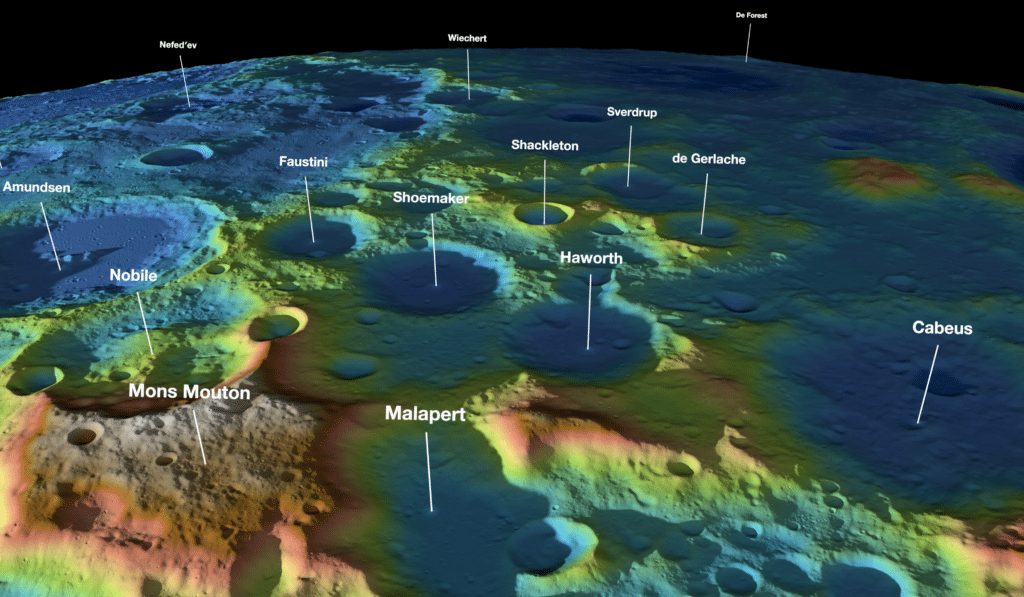
                                                        Surveyors Sydney Lidar 3D Laser Scanning History
                                                        What is 3D Laser Scanning and What is It Used For? Your Complete Guide and Industry Insights. 1

                                                        Technological Advancement and Commercialisation (1980s–1990s)

                                                            • 1980s: Development of more compact, accurate, and cost-effective laser scanning systems began. The technology gained broader acceptance for use in aerial surveying and geographic information systems (GIS).
                                                            • 1990s: Significant advancements in computing technology allowed 3D scanning to transition from strictly aerial applications to terrestrial (ground-based) scanning, opening up applications in construction and heritage preservation. Notably, companies such as Cyra Technologies (later acquired by Leica Geosystems) pioneered the first commercial terrestrial 3D scanners.

                                                          Rapid Commercial Growth (2000s)

                                                              • Early 2000s: Terrestrial laser scanners became more accessible, affordable, and accurate, leading to widespread adoption. Major surveying technology providers, like Leica, Faro, and Trimble, launched sophisticated terrestrial scanners that offered millimetre-level accuracy and drastically improved speed of data capture.
                                                              • Mid-2000s: Integration of laser scanning with Building Information Modelling (BIM) transformed the architectural, engineering, and construction (AEC) industries, allowing for precise digital modelling and improved construction workflows.

                                                            Modern Era (2010–Today)

                                                                • 2010 onwards: Advancements such as mobile LiDAR, drone-based scanning, and handheld scanning solutions emerged, providing rapid, efficient, and portable methods for capturing highly accurate data.
                                                                • Present: Today’s state-of-the-art scanners like the Leica RTC360 and Faro Focus offer real-time data processing, sub-centimetre precision, integrated HD photography, and cloud-based collaboration, making 3D laser scanning an indispensable tool in countless industries.

                                                              How Does The 3D Laser Scanning Process Work?

                                                              The scanning process involves five main steps:

                                                                  1. Project Planning: Clearly define objectives, deliverables, scan resolution, and accuracy.
                                                                  2. On-site Scanning: Trained technicians position the scanner at strategic points, capturing millions of spatial data points via laser pulses.
                                                                  3. Data Capture: Laser pulses reflect off surfaces, calculating exact coordinates (x, y, z).
                                                                  4. Data Processing: Individual scans from multiple locations are combined into a unified point cloud.
                                                                  5. Modelling Data into Interactive Deliverables: Our experienced in-house team of modellers render the registered point cloud into practical user-friendly formats and models that are intuitive and accessible for architects, engineers, contractors and facility managers, to facilitate informed decision-making throughout the project lifecycle
                                                                  6. Quality Assurance and Legal Verification: If project scope includes boundary identification, a Registered Surveyor reviews the completed models to verify that all property boundaries and relevant survey information have been accurately represented. Once verified, the Registered Surveyor provides formal approval and signs off on the documentation, transforming it into a legally recognised and authoritative survey report.
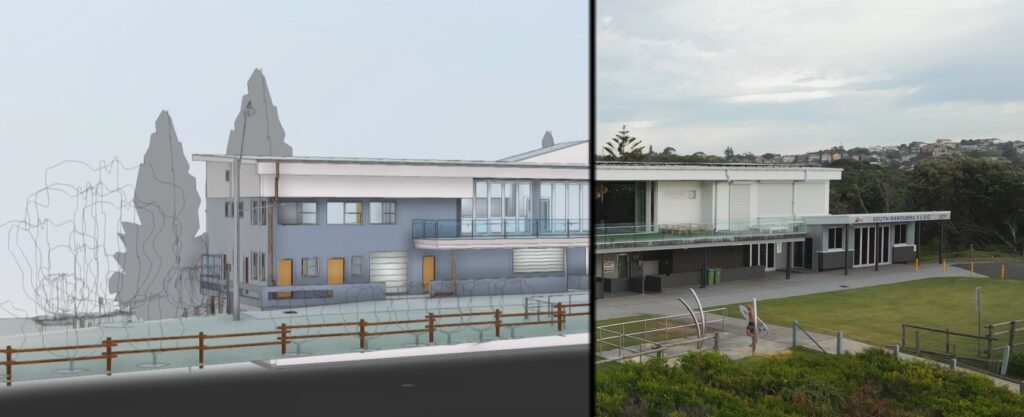
                                                                South Maroubra Surf Club Digital Survey

                                                                Key Benefits of 3D Laser Scanning

                                                                    • High Accuracy: Captures precise details with millimetre-level accuracy.
                                                                    • Efficiency: Reduces traditional survey times significantly.
                                                                    • Detailed Documentation: Provides thorough, measurable, and verifiable records.
                                                                    • Cost Savings: Minimises errors, rework, and additional site visits.
                                                                    • Safety and Accessibility: Safely documents hazardous or hard-to-reach areas.

                                                                  Common Applications of 3D Laser Scanning

                                                                  1. Architecture and Construction

                                                                  Architects and builders use 3D laser scanning to capture existing site conditions accurately. This precise data helps produce accurate as-built drawings, facilitate building information modelling (BIM), and support prefabrication processes, ultimately saving time and resources.
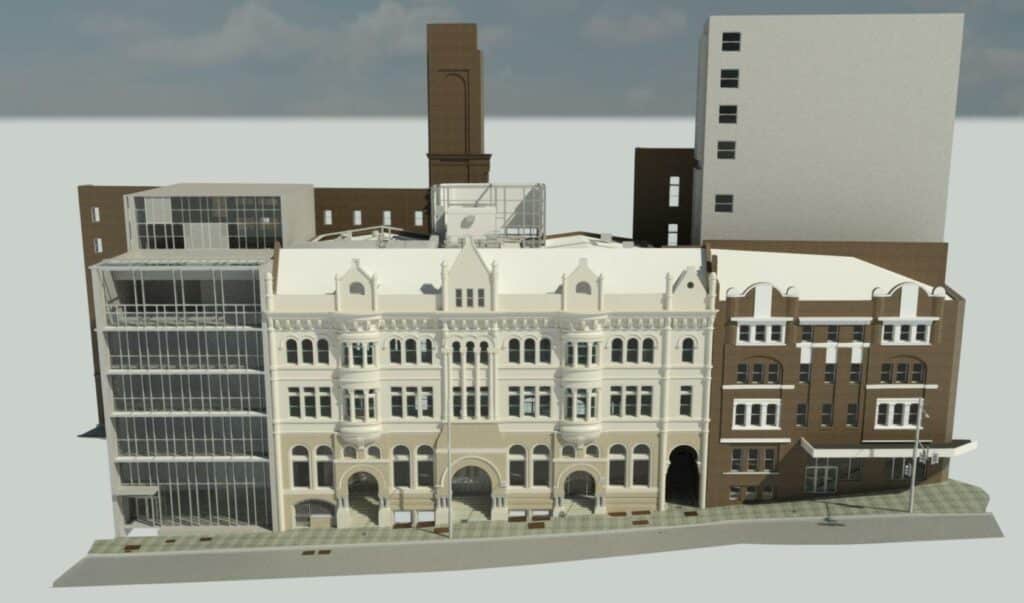
                                                                  Bridge Street Sydney Digital Survey

                                                                  2. Engineering Projects

                                                                  Engineers rely on 3D scans for precise measurements critical in structural analysis, design validation, and project planning. Accurate scans help identify potential issues early, enabling efficient clash detection and avoiding costly redesigns.
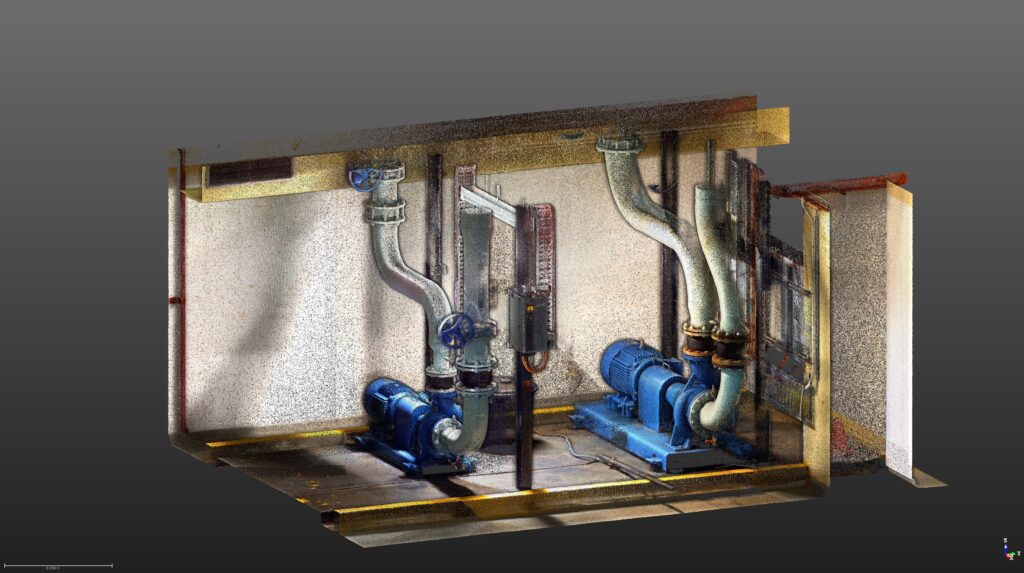
                                                                  Mep Point Cloud Picture

                                                                  3. Historical Preservation

                                                                  Laser scanning plays a crucial role in heritage preservation, allowing detailed documentation of historical sites without causing damage. High-resolution point clouds help conservationists restore and maintain architectural details accurately, such as intricate façades or ancient structures.
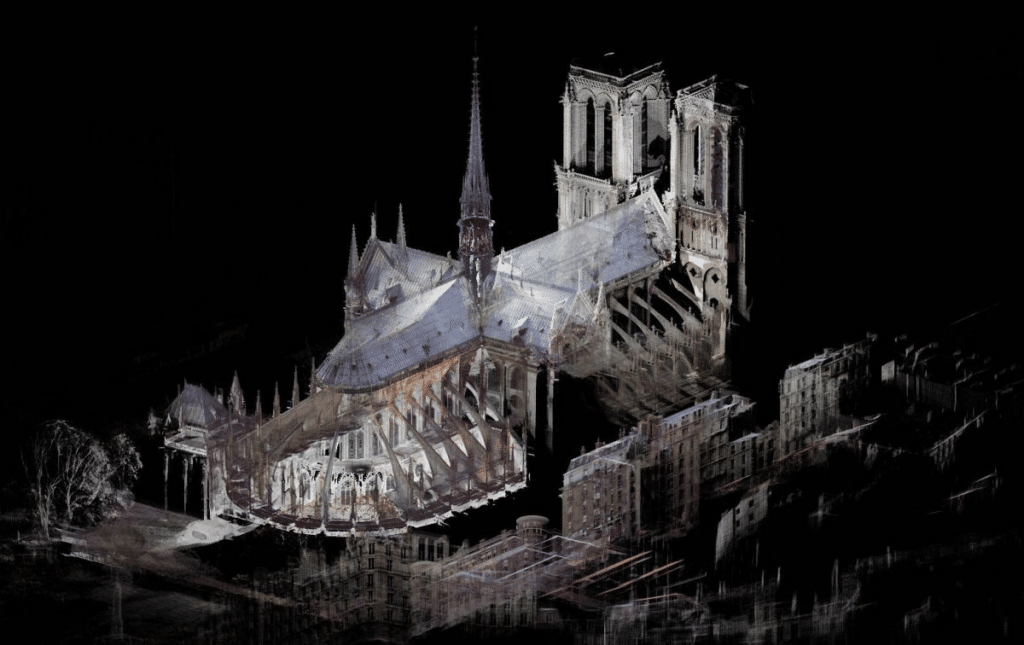
                                                                  Notre Dame - 3D Laser Scan

                                                                  4. Facility and Asset Management

                                                                  Facility managers use 3D scans to create comprehensive digital twins of buildings and industrial facilities. These digital twins allow for improved asset management, facility maintenance planning, and informed decision-making based on precise visual data.

                                                                  3D Modelling Of Mep Systems

                                                                  5. Infrastructure and Urban Planning

                                                                  Scanning aids infrastructure projects by accurately mapping roads, bridges, and public utilities, enhancing safety and efficiency. Urban planners benefit by visualising proposed developments within existing environments through detailed 3D scans, improving stakeholder communication and approvals.
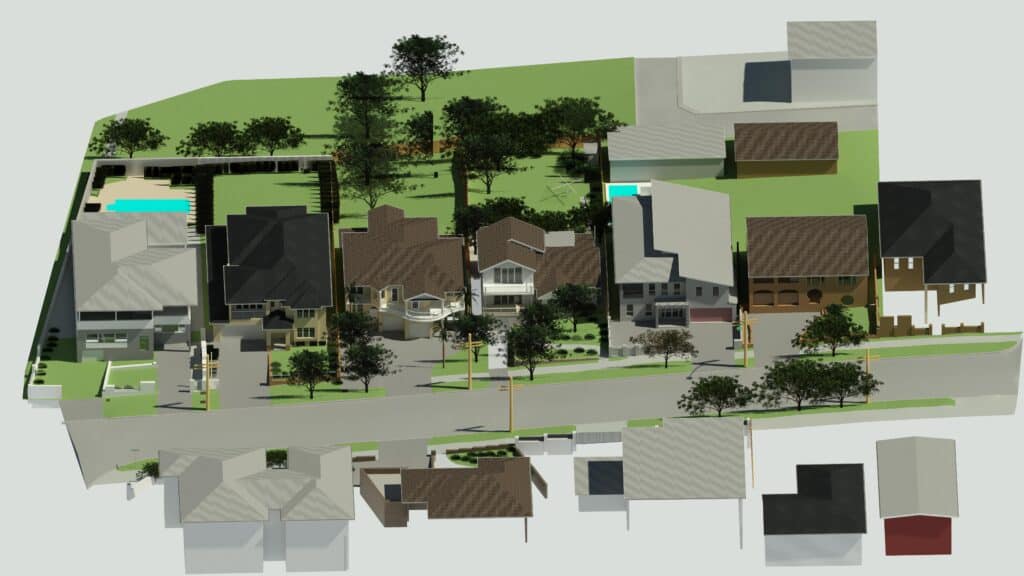
                                                                  3D Survey And Laser Scanning

                                                                  6. Forensic Investigation

                                                                  Law enforcement and forensic teams utilise laser scanning to accurately document crime and accident scenes. The detailed scans preserve vital evidence for analysis and courtroom presentations, providing clarity and objectivity in investigations.
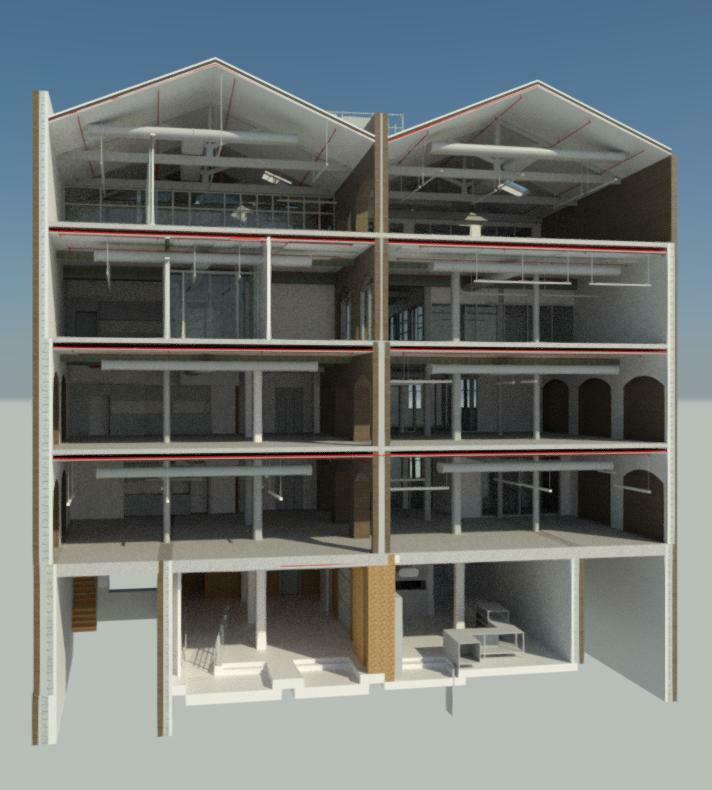
                                                                  C&Amp;A-Surveyors-Commercial-3D-Modelling-And-Survey

                                                                  Case Studies and Real-World Examples

                                                                      • Residential Renovation, Vaucluse (Sydney, NSW): A detailed laser scan of an existing heritage-listed home allowed architects to develop precise renovation plans, preserving original architectural elements while seamlessly integrating modern features.
                                                                      • Commercial Development, Footscray (Melbourne, Victoria): Laser scanning facilitated accurate modelling of complex mechanical, electrical, and plumbing (MEP) systems, reducing project timelines and preventing costly onsite errors.
                                                                      • Infrastructure Project, Hendra (Brisbane, Queensland): Detailed scanning of a bridge provided engineers with accurate structural data, significantly improving project safety and efficiency during renovations.

                                                                    Deliverables Produced by 3D Laser Scanning

                                                                      • Point Clouds: Raw data representing millions of measurement points.
                                                                      • 3D Models: Detailed digital models for BIM, CAD, and virtual walkthroughs.
                                                                      • Virtual Tours and Walkthroughs: Interactive digital experiences for client and stakeholder presentations.
                                                                      • Digital Twins: Comprehensive, virtual replicas of physical assets or environments.

                                                                    Pros and Cons: 3D Laser Scanning vs Traditional 2D Surveying

                                                                    Feature 3D Laser Scanning Traditional 2D Surveying
                                                                    Speed Rapid data capture (millions of points/second) Slow, manual point-by-point measurements
                                                                    Data Richness Comprehensive 3D data Limited 2D coordinates
                                                                    Versatility Creates multiple deliverables Limited deliverable options
                                                                    Cost Higher upfront but lowers total project cost Lower upfront cost
                                                                    Complexity Requires specialised training Requires specialised training

                                                                    Conclusion: 3D scanning excels in accuracy, speed, and versatility, making it invaluable for complex or detailed projects despite higher initial investments.

                                                                    Common Mistakes to Avoid with 3D Laser Scanning

                                                                    To ensure a successful scan, avoid these pitfalls:

                                                                        • Poor Scope Definition: Unclear goals can lead to unnecessary costs and data overload. Clearly define required outputs (e.g., 2D drawings vs detailed 3D models).
                                                                        • Limited Site Access: Restricted access means missed areas or incomplete data. Plan site access thoroughly with your surveyor.
                                                                        • Insufficient Scan Stations: Too few scan positions can leave data gaps. Trust an experienced technician’s recommendation on required positions.
                                                                        • Ignoring Scan Resolution Needs: A low-resolution scan or poor equipment won’t capture critical details for historical preservation, while high-resolution scans may be excessive for simple layouts.
                                                                        • Choosing Inexperienced Providers: Accurate scanning requires trained technicians and reputable equipment; choose wisely to avoid costly reworks.

                                                                      As scanning technology evolves, expect significant developments:

                                                                          • Artificial Intelligence (AI) Integration: AI-driven scanners will automatically identify and classify objects, increasing speed and accuracy in complex environments.
                                                                          • Real-Time Reality Capture: Future scanners will deliver instant point clouds and model updates, ideal for live construction monitoring.
                                                                          • Wearable & Mobile Scanners: Compact, wearable devices will enable continuous scanning while technicians walk the site, enhancing productivity.
                                                                          • Cloud-Based Processing: Faster, accessible processing on cloud platforms, enabling collaborative remote viewing and analysis.

                                                                        As these innovations unfold, expect laser scanning to become even faster, more accessible, and integral to all stages of design, construction, and maintenance.

                                                                        Thumbnail-For-Surveying-Engineer-Working-Site-Survey-By-C&Amp;A Surveyors Sydney

                                                                        Choosing the Right Scanning Solution

                                                                        Selecting the right laser scanning solution involves considering the project requirements such as resolution, accuracy, project scale, and deliverable needs. Consulting with experienced scanning providers ensures optimal outcomes, efficient workflows, and valuable insights into using laser scanning effectively.

                                                                        Expert Insight

                                                                        “The pace of advancement in 3D laser scanning is unprecedented. Soon, we’ll see scanners everywhere – not just on tripods, but built into everyday devices – turning every walk-through into valuable digital data.”
                                                                        — Tristan Smythe, 3D Modelling Manager, C&A Surveyors

                                                                        A Surveyor Using His Tools On The Job

                                                                        Frequently Asked Questions (FAQs)

                                                                        How long does a 3D laser scan take?

                                                                        Most residential or commercial scans take several hours to a few days, depending on the size and complexity of the project.

                                                                        Is 3D laser scanning safe?

                                                                        Yes, laser scanning is entirely safe. It uses Class 1 lasers, posing no risk to humans, animals, or structures.

                                                                        Can 3D scans replace traditional surveys?

                                                                        Yes, 3D laser scanning excels in detailed data capture and the data can be used in line with traditional surveys. Some councils require surveys that have the boundaries of your property defined, so it’s important you consult with us prior to booking in a survey.

                                                                        Will 3D laser scanning disrupt my site?

                                                                        No. Laser scanning is non-invasive, silent, and safe for people, animals, and structures. Scans are typically completed with minimal disturbance.

                                                                        Why Choose C&A Surveyors?

                                                                        At C&A Surveyors, we offer cutting-edge 3D laser scanning services tailored to your project’s specific needs.

                                                                        With over 15 years of experience and a 4.9-star Google rating from over 200 reviews, our highly skilled team utilise advanced scanning technology, ensuring precise and efficient results that significantly enhance your project’s accuracy, cost-effectiveness, and timeline.

                                                                        • Proven Expertise: Years of experience across residential, commercial, heritage, and infrastructure projects.
                                                                        • Comprehensive Support: End-to-end project guidance, from initial consultation to final deliverables.
                                                                        • State-of-the-Art Equipment: Utilising the latest LiDAR scanners like Leica RTC360 for unmatched data quality.

                                                                        Contact us today to learn how we can transform your project through our comprehensive surveying expertise.

                                                                        Learn More About Us and How We Work

                                                                        At C&A Surveyors, we believe in making surveying and 3D laser scanning simple, transparent, and stress-free.

                                                                        Our process is designed to give you complete confidence from the moment you engage us. We begin with a clear explanation of what your project needs, followed by fast, accurate fieldwork and detailed reporting that meets council and legal standards. With in-house Registered Surveyors, advanced technology, and a dedicated client portal, we keep you informed every step of the way.

                                                                        Whether you’re planning a build, subdivision, or development application, we’re here to help you get it right from the ground up. Learn more about our approach here, watch the video below and get in touch for a personalised consultation!

                                                                        [/et_pb_text][/et_pb_column][/et_pb_row][/et_pb_section]

                                                                        3D laser scanning, now a staple technology across construction, engineering, and architecture, has a rich history that spans over five decades. Here’s a comprehensive timeline outlining the evolution of this transformative technology:

                                                                        Early Beginnings (1960s–1970s)

                                                                            • 1960: The birth of LiDAR technology originated shortly after the invention of the laser itself. Initially, it was primarily employed by NASA and military organisations for remote sensing, mapping terrains, and topographical analysis.
                                                                            • 1971: NASA famously utilised early LiDAR scanners during the Apollo 15 mission to map the Moon’s surface with unprecedented detail.
                                                                          Surveyors Sydney Lidar 3D Laser Scanning History
                                                                          What is 3D Laser Scanning and What is It Used For? Your Complete Guide and Industry Insights. 2

                                                                          Technological Advancement and Commercialisation (1980s–1990s)

                                                                              • 1980s: Development of more compact, accurate, and cost-effective laser scanning systems began. The technology gained broader acceptance for use in aerial surveying and geographic information systems (GIS).
                                                                              • 1990s: Significant advancements in computing technology allowed 3D scanning to transition from strictly aerial applications to terrestrial (ground-based) scanning, opening up applications in construction and heritage preservation. Notably, companies such as Cyra Technologies (later acquired by Leica Geosystems) pioneered the first commercial terrestrial 3D scanners.

                                                                            Rapid Commercial Growth (2000s)

                                                                                • Early 2000s: Terrestrial laser scanners became more accessible, affordable, and accurate, leading to widespread adoption. Major surveying technology providers, like Leica, Faro, and Trimble, launched sophisticated terrestrial scanners that offered millimetre-level accuracy and drastically improved speed of data capture.
                                                                                • Mid-2000s: Integration of laser scanning with Building Information Modelling (BIM) transformed the architectural, engineering, and construction (AEC) industries, allowing for precise digital modelling and improved construction workflows.

                                                                              Modern Era (2010–Today)

                                                                                  • 2010 onwards: Advancements such as mobile LiDAR, drone-based scanning, and handheld scanning solutions emerged, providing rapid, efficient, and portable methods for capturing highly accurate data.
                                                                                  • Present: Today’s state-of-the-art scanners like the Leica RTC360 and Faro Focus offer real-time data processing, sub-centimetre precision, integrated HD photography, and cloud-based collaboration, making 3D laser scanning an indispensable tool in countless industries.

                                                                                How Does The 3D Laser Scanning Process Work?

                                                                                The scanning process involves five main steps:

                                                                                    1. Project Planning: Clearly define objectives, deliverables, scan resolution, and accuracy.
                                                                                    2. On-site Scanning: Trained technicians position the scanner at strategic points, capturing millions of spatial data points via laser pulses.
                                                                                    3. Data Capture: Laser pulses reflect off surfaces, calculating exact coordinates (x, y, z).
                                                                                    4. Data Processing: Individual scans from multiple locations are combined into a unified point cloud.
                                                                                    5. Modelling Data into Interactive Deliverables: Our experienced in-house team of modellers render the registered point cloud into practical user-friendly formats and models that are intuitive and accessible for architects, engineers, contractors and facility managers, to facilitate informed decision-making throughout the project lifecycle
                                                                                    6. Quality Assurance and Legal Verification: If project scope includes boundary identification, a Registered Surveyor reviews the completed models to verify that all property boundaries and relevant survey information have been accurately represented. Once verified, the Registered Surveyor provides formal approval and signs off on the documentation, transforming it into a legally recognised and authoritative survey report.

                                                                                  South Maroubra Surf Club Digital Survey

                                                                                  Key Benefits of 3D Laser Scanning

                                                                                      • High Accuracy: Captures precise details with millimetre-level accuracy.
                                                                                      • Efficiency: Reduces traditional survey times significantly.
                                                                                      • Detailed Documentation: Provides thorough, measurable, and verifiable records.
                                                                                      • Cost Savings: Minimises errors, rework, and additional site visits.
                                                                                      • Safety and Accessibility: Safely documents hazardous or hard-to-reach areas.

                                                                                    Common Applications of 3D Laser Scanning

                                                                                    1. Architecture and Construction

                                                                                    Architects and builders use 3D laser scanning to capture existing site conditions accurately. This precise data helps produce accurate as-built drawings, facilitate building information modelling (BIM), and support prefabrication processes, ultimately saving time and resources.

                                                                                    Bridge Street Sydney Digital Survey

                                                                                    2. Engineering Projects

                                                                                    Engineers rely on 3D scans for precise measurements critical in structural analysis, design validation, and project planning. Accurate scans help identify potential issues early, enabling efficient clash detection and avoiding costly redesigns.

                                                                                    Mep Point Cloud Picture

                                                                                    3. Historical Preservation

                                                                                    Laser scanning plays a crucial role in heritage preservation, allowing detailed documentation of historical sites without causing damage. High-resolution point clouds help conservationists restore and maintain architectural details accurately, such as intricate façades or ancient structures.

                                                                                    Notre Dame - 3D Laser Scan

                                                                                    4. Facility and Asset Management

                                                                                    Facility managers use 3D scans to create comprehensive digital twins of buildings and industrial facilities. These digital twins allow for improved asset management, facility maintenance planning, and informed decision-making based on precise visual data.

                                                                                    3D Modelling Of Mep Systems

                                                                                    5. Infrastructure and Urban Planning

                                                                                    Scanning aids infrastructure projects by accurately mapping roads, bridges, and public utilities, enhancing safety and efficiency. Urban planners benefit by visualising proposed developments within existing environments through detailed 3D scans, improving stakeholder communication and approvals.

                                                                                    3D Survey And Laser Scanning

                                                                                    6. Forensic Investigation

                                                                                    Law enforcement and forensic teams utilise laser scanning to accurately document crime and accident scenes. The detailed scans preserve vital evidence for analysis and courtroom presentations, providing clarity and objectivity in investigations.

                                                                                    C&Amp;A-Surveyors-Commercial-3D-Modelling-And-Survey

                                                                                    Case Studies and Real-World Examples

                                                                                        • Residential Renovation, Vaucluse (Sydney, NSW): A detailed laser scan of an existing heritage-listed home allowed architects to develop precise renovation plans, preserving original architectural elements while seamlessly integrating modern features.
                                                                                        • Commercial Development, Footscray (Melbourne, Victoria): Laser scanning facilitated accurate modelling of complex mechanical, electrical, and plumbing (MEP) systems, reducing project timelines and preventing costly onsite errors.
                                                                                        • Infrastructure Project, Hendra (Brisbane, Queensland): Detailed scanning of a bridge provided engineers with accurate structural data, significantly improving project safety and efficiency during renovations.

                                                                                      Deliverables Produced by 3D Laser Scanning

                                                                                        • Point Clouds: Raw data representing millions of measurement points.
                                                                                        • 3D Models: Detailed digital models for BIM, CAD, and virtual walkthroughs.
                                                                                        • Virtual Tours and Walkthroughs: Interactive digital experiences for client and stakeholder presentations.
                                                                                        • Digital Twins: Comprehensive, virtual replicas of physical assets or environments.

                                                                                      Pros and Cons: 3D Laser Scanning vs Traditional 2D Surveying

                                                                                      Feature 3D Laser Scanning Traditional 2D Surveying
                                                                                      Speed Rapid data capture (millions of points/second) Slow, manual point-by-point measurements
                                                                                      Data Richness Comprehensive 3D data Limited 2D coordinates
                                                                                      Versatility Creates multiple deliverables Limited deliverable options
                                                                                      Cost Higher upfront but lowers total project cost Lower upfront cost
                                                                                      Complexity Requires specialised training Requires specialised training

                                                                                      Conclusion: 3D scanning excels in accuracy, speed, and versatility, making it invaluable for complex or detailed projects despite higher initial investments.

                                                                                      Common Mistakes to Avoid with 3D Laser Scanning

                                                                                      To ensure a successful scan, avoid these pitfalls:

                                                                                          • Poor Scope Definition: Unclear goals can lead to unnecessary costs and data overload. Clearly define required outputs (e.g., 2D drawings vs detailed 3D models).
                                                                                          • Limited Site Access: Restricted access means missed areas or incomplete data. Plan site access thoroughly with your surveyor.
                                                                                          • Insufficient Scan Stations: Too few scan positions can leave data gaps. Trust an experienced technician’s recommendation on required positions.
                                                                                          • Ignoring Scan Resolution Needs: A low-resolution scan or poor equipment won’t capture critical details for historical preservation, while high-resolution scans may be excessive for simple layouts.
                                                                                          • Choosing Inexperienced Providers: Accurate scanning requires trained technicians and reputable equipment; choose wisely to avoid costly reworks.

                                                                                        As scanning technology evolves, expect significant developments:

                                                                                            • Artificial Intelligence (AI) Integration: AI-driven scanners will automatically identify and classify objects, increasing speed and accuracy in complex environments.
                                                                                            • Real-Time Reality Capture: Future scanners will deliver instant point clouds and model updates, ideal for live construction monitoring.
                                                                                            • Wearable & Mobile Scanners: Compact, wearable devices will enable continuous scanning while technicians walk the site, enhancing productivity.
                                                                                            • Cloud-Based Processing: Faster, accessible processing on cloud platforms, enabling collaborative remote viewing and analysis.

                                                                                          As these innovations unfold, expect laser scanning to become even faster, more accessible, and integral to all stages of design, construction, and maintenance.

                                                                                          Thumbnail-For-Surveying-Engineer-Working-Site-Survey-By-C&Amp;A Surveyors Sydney

                                                                                          Choosing the Right Scanning Solution

                                                                                          Selecting the right laser scanning solution involves considering the project requirements such as resolution, accuracy, project scale, and deliverable needs. Consulting with experienced scanning providers ensures optimal outcomes, efficient workflows, and valuable insights into using laser scanning effectively.

                                                                                          Expert Insight

                                                                                          “The pace of advancement in 3D laser scanning is unprecedented. Soon, we’ll see scanners everywhere – not just on tripods, but built into everyday devices – turning every walk-through into valuable digital data.”
                                                                                          — Tristan Smythe, 3D Modelling Manager, C&A Surveyors

                                                                                          A Surveyor Using His Tools On The Job

                                                                                          Frequently Asked Questions (FAQs)

                                                                                          How long does a 3D laser scan take?

                                                                                          Most residential or commercial scans take several hours to a few days, depending on the size and complexity of the project.

                                                                                          Is 3D laser scanning safe?

                                                                                          Yes, laser scanning is entirely safe. It uses Class 1 lasers, posing no risk to humans, animals, or structures.

                                                                                          Can 3D scans replace traditional surveys?

                                                                                          Yes, 3D laser scanning excels in detailed data capture and the data can be used in line with traditional surveys. Some councils require surveys that have the boundaries of your property defined, so it’s important you consult with us prior to booking in a survey.

                                                                                          Will 3D laser scanning disrupt my site?

                                                                                          No. Laser scanning is non-invasive, silent, and safe for people, animals, and structures. Scans are typically completed with minimal disturbance.

                                                                                          Why Choose C&A Surveyors?

                                                                                          At C&A Surveyors, we offer cutting-edge 3D laser scanning services tailored to your project’s specific needs.

                                                                                          With over 15 years of experience and a 4.9-star Google rating from over 200 reviews, our highly skilled team utilise advanced scanning technology, ensuring precise and efficient results that significantly enhance your project’s accuracy, cost-effectiveness, and timeline.

                                                                                          • Proven Expertise: Years of experience across residential, commercial, heritage, and infrastructure projects.
                                                                                          • Comprehensive Support: End-to-end project guidance, from initial consultation to final deliverables.
                                                                                          • State-of-the-Art Equipment: Utilising the latest LiDAR scanners like Leica RTC360 for unmatched data quality.

                                                                                          Contact us today to learn how we can transform your project through our comprehensive surveying expertise.

                                                                                          Learn More About Us and How We Work

                                                                                          At C&A Surveyors, we believe in making surveying and 3D laser scanning simple, transparent, and stress-free.

                                                                                          Our process is designed to give you complete confidence from the moment you engage us. We begin with a clear explanation of what your project needs, followed by fast, accurate fieldwork and detailed reporting that meets council and legal standards. With in-house Registered Surveyors, advanced technology, and a dedicated client portal, we keep you informed every step of the way.

                                                                                          Whether you’re planning a build, subdivision, or development application, we’re here to help you get it right from the ground up. Learn more about our approach here, watch the video below and get in touch for a personalised consultation!

                                                                                          [/et_pb_text][/et_pb_column][/et_pb_row][/et_pb_section]

                                                                                          From preserving historical treasures to streamlining the construction of Sydney’s latest skyscraper, 3D laser scanning is revolutionising how we visualise and document the physical world. This advanced technology creates digital replicas of real-world spaces with remarkable precision, transforming how architects, engineers, builders, land surveyors and facility managers approach their work.

                                                                                          In this comprehensive guide, we’ll explore what 3D laser scanning is, how it works, its history and origins, current applications, pros and cons compared to traditional surveying, common mistakes to avoid, and exciting future trends.

                                                                                          Registered Surveyor 3D Modelling

                                                                                          What is 3D Laser Scanning?

                                                                                          3D laser scanning is a powerful technology that uses LiDAR (Light Detection and Ranging) to capture precise spatial measurements of buildings, structures, landscapes, and objects, to produce detailed and accurate digital representations called point clouds.

                                                                                          A laser scanner emits millions of laser pulses that reflect off surfaces and return to the sensor. By calculating the time it takes for each pulse to return, the scanner precisely measures distances, creating a detailed 3D digital representation of the scanned area known as a “point cloud.” Each point in the cloud contains x, y, and z coordinates, capturing every dimension of an environment with remarkable accuracy (within millimetres).

                                                                                          Modern scanners, such as the Leica RTC360 or FARO Focus, can capture millions of points per second, quickly building comprehensive 3D models. The scanning process typically involves positioning the scanner at multiple locations around a site to ensure complete coverage, overcoming line-of-sight limitations.

                                                                                          History and Origins of 3D Laser Scanning

                                                                                          3D laser scanning, now a staple technology across construction, engineering, and architecture, has a rich history that spans over five decades. Here’s a comprehensive timeline outlining the evolution of this transformative technology:

                                                                                          Early Beginnings (1960s–1970s)

                                                                                              • 1960: The birth of LiDAR technology originated shortly after the invention of the laser itself. Initially, it was primarily employed by NASA and military organisations for remote sensing, mapping terrains, and topographical analysis.
                                                                                              • 1971: NASA famously utilised early LiDAR scanners during the Apollo 15 mission to map the Moon’s surface with unprecedented detail.
                                                                                            Surveyors Sydney Lidar 3D Laser Scanning History
                                                                                            What is 3D Laser Scanning and What is It Used For? Your Complete Guide and Industry Insights. 3

                                                                                            Technological Advancement and Commercialisation (1980s–1990s)

                                                                                                • 1980s: Development of more compact, accurate, and cost-effective laser scanning systems began. The technology gained broader acceptance for use in aerial surveying and geographic information systems (GIS).
                                                                                                • 1990s: Significant advancements in computing technology allowed 3D scanning to transition from strictly aerial applications to terrestrial (ground-based) scanning, opening up applications in construction and heritage preservation. Notably, companies such as Cyra Technologies (later acquired by Leica Geosystems) pioneered the first commercial terrestrial 3D scanners.

                                                                                              Rapid Commercial Growth (2000s)

                                                                                                  • Early 2000s: Terrestrial laser scanners became more accessible, affordable, and accurate, leading to widespread adoption. Major surveying technology providers, like Leica, Faro, and Trimble, launched sophisticated terrestrial scanners that offered millimetre-level accuracy and drastically improved speed of data capture.
                                                                                                  • Mid-2000s: Integration of laser scanning with Building Information Modelling (BIM) transformed the architectural, engineering, and construction (AEC) industries, allowing for precise digital modelling and improved construction workflows.

                                                                                                Modern Era (2010–Today)

                                                                                                    • 2010 onwards: Advancements such as mobile LiDAR, drone-based scanning, and handheld scanning solutions emerged, providing rapid, efficient, and portable methods for capturing highly accurate data.
                                                                                                    • Present: Today’s state-of-the-art scanners like the Leica RTC360 and Faro Focus offer real-time data processing, sub-centimetre precision, integrated HD photography, and cloud-based collaboration, making 3D laser scanning an indispensable tool in countless industries.

                                                                                                  How Does The 3D Laser Scanning Process Work?

                                                                                                  The scanning process involves five main steps:

                                                                                                      1. Project Planning: Clearly define objectives, deliverables, scan resolution, and accuracy.
                                                                                                      2. On-site Scanning: Trained technicians position the scanner at strategic points, capturing millions of spatial data points via laser pulses.
                                                                                                      3. Data Capture: Laser pulses reflect off surfaces, calculating exact coordinates (x, y, z).
                                                                                                      4. Data Processing: Individual scans from multiple locations are combined into a unified point cloud.
                                                                                                      5. Modelling Data into Interactive Deliverables: Our experienced in-house team of modellers render the registered point cloud into practical user-friendly formats and models that are intuitive and accessible for architects, engineers, contractors and facility managers, to facilitate informed decision-making throughout the project lifecycle
                                                                                                      6. Quality Assurance and Legal Verification: If project scope includes boundary identification, a Registered Surveyor reviews the completed models to verify that all property boundaries and relevant survey information have been accurately represented. Once verified, the Registered Surveyor provides formal approval and signs off on the documentation, transforming it into a legally recognised and authoritative survey report.

                                                                                                    South Maroubra Surf Club Digital Survey

                                                                                                    Key Benefits of 3D Laser Scanning

                                                                                                        • High Accuracy: Captures precise details with millimetre-level accuracy.
                                                                                                        • Efficiency: Reduces traditional survey times significantly.
                                                                                                        • Detailed Documentation: Provides thorough, measurable, and verifiable records.
                                                                                                        • Cost Savings: Minimises errors, rework, and additional site visits.
                                                                                                        • Safety and Accessibility: Safely documents hazardous or hard-to-reach areas.

                                                                                                      Common Applications of 3D Laser Scanning

                                                                                                      1. Architecture and Construction

                                                                                                      Architects and builders use 3D laser scanning to capture existing site conditions accurately. This precise data helps produce accurate as-built drawings, facilitate building information modelling (BIM), and support prefabrication processes, ultimately saving time and resources.

                                                                                                      Bridge Street Sydney Digital Survey

                                                                                                      2. Engineering Projects

                                                                                                      Engineers rely on 3D scans for precise measurements critical in structural analysis, design validation, and project planning. Accurate scans help identify potential issues early, enabling efficient clash detection and avoiding costly redesigns.

                                                                                                      Mep Point Cloud Picture

                                                                                                      3. Historical Preservation

                                                                                                      Laser scanning plays a crucial role in heritage preservation, allowing detailed documentation of historical sites without causing damage. High-resolution point clouds help conservationists restore and maintain architectural details accurately, such as intricate façades or ancient structures.

                                                                                                      Notre Dame - 3D Laser Scan

                                                                                                      4. Facility and Asset Management

                                                                                                      Facility managers use 3D scans to create comprehensive digital twins of buildings and industrial facilities. These digital twins allow for improved asset management, facility maintenance planning, and informed decision-making based on precise visual data.

                                                                                                      3D Modelling Of Mep Systems

                                                                                                      5. Infrastructure and Urban Planning

                                                                                                      Scanning aids infrastructure projects by accurately mapping roads, bridges, and public utilities, enhancing safety and efficiency. Urban planners benefit by visualising proposed developments within existing environments through detailed 3D scans, improving stakeholder communication and approvals.

                                                                                                      3D Survey And Laser Scanning

                                                                                                      6. Forensic Investigation

                                                                                                      Law enforcement and forensic teams utilise laser scanning to accurately document crime and accident scenes. The detailed scans preserve vital evidence for analysis and courtroom presentations, providing clarity and objectivity in investigations.

                                                                                                      C&Amp;A-Surveyors-Commercial-3D-Modelling-And-Survey

                                                                                                      Case Studies and Real-World Examples

                                                                                                          • Residential Renovation, Vaucluse (Sydney, NSW): A detailed laser scan of an existing heritage-listed home allowed architects to develop precise renovation plans, preserving original architectural elements while seamlessly integrating modern features.
                                                                                                          • Commercial Development, Footscray (Melbourne, Victoria): Laser scanning facilitated accurate modelling of complex mechanical, electrical, and plumbing (MEP) systems, reducing project timelines and preventing costly onsite errors.
                                                                                                          • Infrastructure Project, Hendra (Brisbane, Queensland): Detailed scanning of a bridge provided engineers with accurate structural data, significantly improving project safety and efficiency during renovations.

                                                                                                        Deliverables Produced by 3D Laser Scanning

                                                                                                          • Point Clouds: Raw data representing millions of measurement points.
                                                                                                          • 3D Models: Detailed digital models for BIM, CAD, and virtual walkthroughs.
                                                                                                          • Virtual Tours and Walkthroughs: Interactive digital experiences for client and stakeholder presentations.
                                                                                                          • Digital Twins: Comprehensive, virtual replicas of physical assets or environments.

                                                                                                        Pros and Cons: 3D Laser Scanning vs Traditional 2D Surveying

                                                                                                        Feature 3D Laser Scanning Traditional 2D Surveying
                                                                                                        Speed Rapid data capture (millions of points/second) Slow, manual point-by-point measurements
                                                                                                        Data Richness Comprehensive 3D data Limited 2D coordinates
                                                                                                        Versatility Creates multiple deliverables Limited deliverable options
                                                                                                        Cost Higher upfront but lowers total project cost Lower upfront cost
                                                                                                        Complexity Requires specialised training Requires specialised training

                                                                                                        Conclusion: 3D scanning excels in accuracy, speed, and versatility, making it invaluable for complex or detailed projects despite higher initial investments.

                                                                                                        Common Mistakes to Avoid with 3D Laser Scanning

                                                                                                        To ensure a successful scan, avoid these pitfalls:

                                                                                                            • Poor Scope Definition: Unclear goals can lead to unnecessary costs and data overload. Clearly define required outputs (e.g., 2D drawings vs detailed 3D models).
                                                                                                            • Limited Site Access: Restricted access means missed areas or incomplete data. Plan site access thoroughly with your surveyor.
                                                                                                            • Insufficient Scan Stations: Too few scan positions can leave data gaps. Trust an experienced technician’s recommendation on required positions.
                                                                                                            • Ignoring Scan Resolution Needs: A low-resolution scan or poor equipment won’t capture critical details for historical preservation, while high-resolution scans may be excessive for simple layouts.
                                                                                                            • Choosing Inexperienced Providers: Accurate scanning requires trained technicians and reputable equipment; choose wisely to avoid costly reworks.

                                                                                                          As scanning technology evolves, expect significant developments:

                                                                                                              • Artificial Intelligence (AI) Integration: AI-driven scanners will automatically identify and classify objects, increasing speed and accuracy in complex environments.
                                                                                                              • Real-Time Reality Capture: Future scanners will deliver instant point clouds and model updates, ideal for live construction monitoring.
                                                                                                              • Wearable & Mobile Scanners: Compact, wearable devices will enable continuous scanning while technicians walk the site, enhancing productivity.
                                                                                                              • Cloud-Based Processing: Faster, accessible processing on cloud platforms, enabling collaborative remote viewing and analysis.

                                                                                                            As these innovations unfold, expect laser scanning to become even faster, more accessible, and integral to all stages of design, construction, and maintenance.

                                                                                                            Thumbnail-For-Surveying-Engineer-Working-Site-Survey-By-C&Amp;A Surveyors Sydney

                                                                                                            Choosing the Right Scanning Solution

                                                                                                            Selecting the right laser scanning solution involves considering the project requirements such as resolution, accuracy, project scale, and deliverable needs. Consulting with experienced scanning providers ensures optimal outcomes, efficient workflows, and valuable insights into using laser scanning effectively.

                                                                                                            Expert Insight

                                                                                                            “The pace of advancement in 3D laser scanning is unprecedented. Soon, we’ll see scanners everywhere – not just on tripods, but built into everyday devices – turning every walk-through into valuable digital data.”
                                                                                                            — Tristan Smythe, 3D Modelling Manager, C&A Surveyors

                                                                                                            A Surveyor Using His Tools On The Job

                                                                                                            Frequently Asked Questions (FAQs)

                                                                                                            How long does a 3D laser scan take?

                                                                                                            Most residential or commercial scans take several hours to a few days, depending on the size and complexity of the project.

                                                                                                            Is 3D laser scanning safe?

                                                                                                            Yes, laser scanning is entirely safe. It uses Class 1 lasers, posing no risk to humans, animals, or structures.

                                                                                                            Can 3D scans replace traditional surveys?

                                                                                                            Yes, 3D laser scanning excels in detailed data capture and the data can be used in line with traditional surveys. Some councils require surveys that have the boundaries of your property defined, so it’s important you consult with us prior to booking in a survey.

                                                                                                            Will 3D laser scanning disrupt my site?

                                                                                                            No. Laser scanning is non-invasive, silent, and safe for people, animals, and structures. Scans are typically completed with minimal disturbance.

                                                                                                            Why Choose C&A Surveyors?

                                                                                                            At C&A Surveyors, we offer cutting-edge 3D laser scanning services tailored to your project’s specific needs.

                                                                                                            With over 15 years of experience and a 4.9-star Google rating from over 200 reviews, our highly skilled team utilise advanced scanning technology, ensuring precise and efficient results that significantly enhance your project’s accuracy, cost-effectiveness, and timeline.

                                                                                                            • Proven Expertise: Years of experience across residential, commercial, heritage, and infrastructure projects.
                                                                                                            • Comprehensive Support: End-to-end project guidance, from initial consultation to final deliverables.
                                                                                                            • State-of-the-Art Equipment: Utilising the latest LiDAR scanners like Leica RTC360 for unmatched data quality.

                                                                                                            Contact us today to learn how we can transform your project through our comprehensive surveying expertise.

                                                                                                            Learn More About Us and How We Work

                                                                                                            At C&A Surveyors, we believe in making surveying and 3D laser scanning simple, transparent, and stress-free.

                                                                                                            Our process is designed to give you complete confidence from the moment you engage us. We begin with a clear explanation of what your project needs, followed by fast, accurate fieldwork and detailed reporting that meets council and legal standards. With in-house Registered Surveyors, advanced technology, and a dedicated client portal, we keep you informed every step of the way.

                                                                                                            Whether you’re planning a build, subdivision, or development application, we’re here to help you get it right from the ground up. Learn more about our approach here, watch the video below and get in touch for a personalised consultation!

                                                                                                            C&A Surveyors Sydney Logo
                                                                                                            At C&A Surveyors, we’ve been redefining surveying excellence since 2009. What started as a small, customer-focused firm has grown into a powerhouse of 50+ professionals, including 25 expert land surveyors specialising in cadastral, construction, 3D, and registered surveying disciplines.

                                                                                                            Request a free proposal

                                                                                                            Simply complete the form below, or call and speak to our team today on (02) 9167 0209

                                                                                                            "*" indicates required fields

                                                                                                            Seraphinite AcceleratorBannerText_Seraphinite Accelerator
                                                                                                            Turns on site high speed to be attractive for people and search engines.